If you’re looking to kickstart a career in software testing in Australia, the ISTQB Syllabus (CTFL v4.0) Foundation Level is your first pit stop. The ISTQB, or International Software Testing Qualifications Board, has long been the global standard for software testing certification, and the CTFL v4.0 update has brought a few exciting changes that every aspiring tester should know.
This guide is designed to make the ISTQB syllabus explained in simple terms, without overwhelming you with jargon. Whether you are in Sydney, Melbourne, Brisbane, or anywhere else in Australia, this article will give you everything you need to understand the syllabus, prepare for the ISTQB exam, and confidently aim for your ISTQB certification in Australia.
What is the ISTQB CTFL v4.0?
Before we get into the specifics, let’s clarify the terms. CTFL stands for Certified Tester Foundation Level. This is the foundation level of the ISTQB qualifications. Version 4.0 of the syllabus has incorporated the changes in the best practices in the industry. The new syllabus places more emphasis on agile testing and the changing software development world.
You can think of it like the new version of your favorite app. The basic features are the same, but they’re more refined, more intelligent, and more suited to the world we live in today.
Why ISTQB Certification Matters in Australia
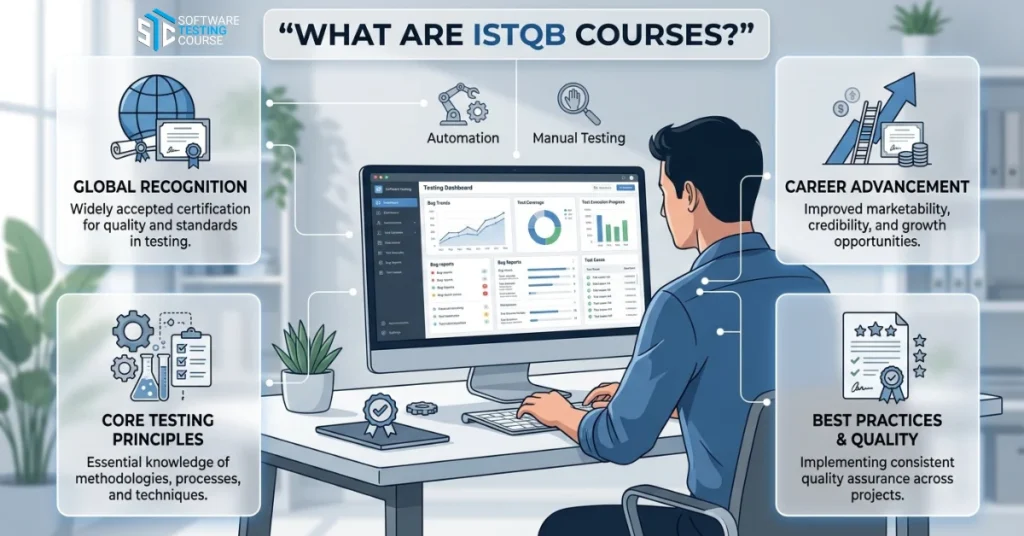
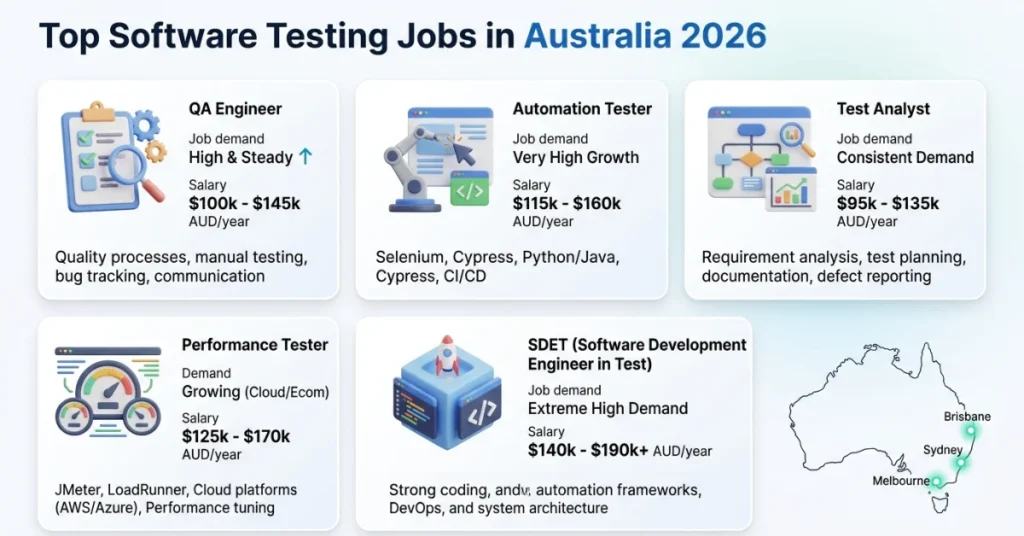
The software testing industry in Australia is booming, and employers place high value on certified software testers. Being certified in ISTQB in Australia will give you recognition, better job prospects at higher salaries, and show you have a grasp of global testing standards.
Industry reports indicate that there has been a steady increase in software testing jobs in Australia in the past five years, with the highest demand in cities like Sydney and Melbourne. In fact, certified software testers are said to earn better than those without certifications, and employers look for candidates with international standard certifications.
So, if you want a solid start in software testing, the ISTQB CTFL v4.0 is your ticket.
Overview of the ISTQB Syllabus For Foundation Level
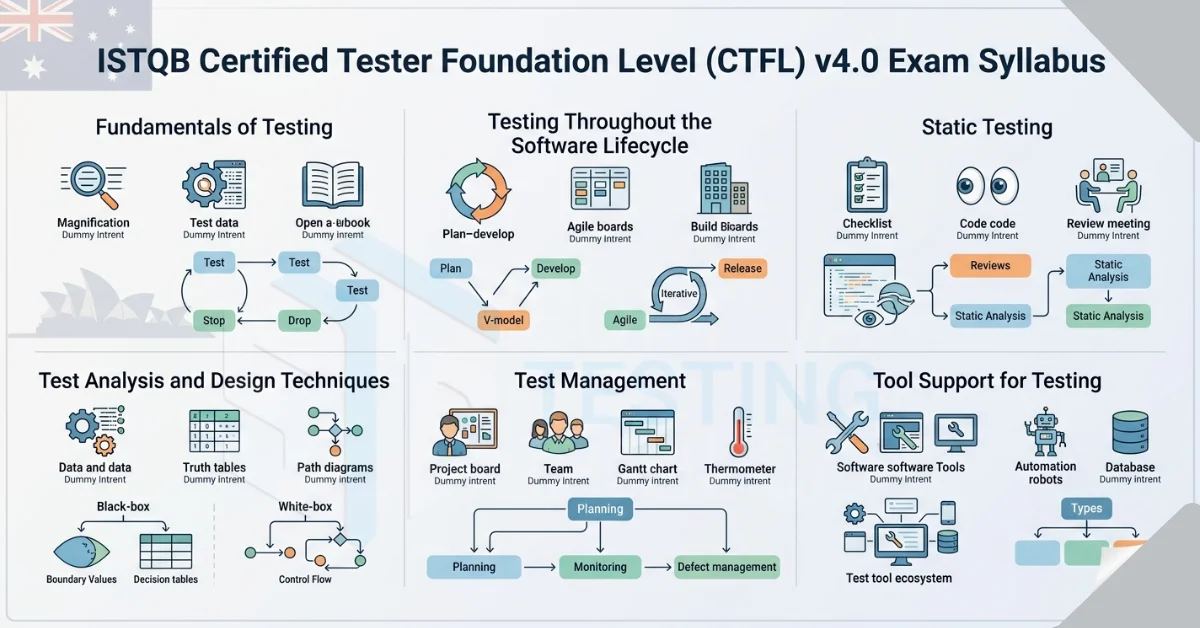
The ISTQB Foundation Level syllabus is structured to cover all the essential concepts of software testing. It’s divided into key sections, each focusing on practical skills that testers need.
Here’s a simplified breakdown:
1. Fundamentals of Testing
This section introduces the purpose of testing and its importance in software quality. You’ll learn about:
- Why testing is necessary
- Basic testing principles
- Testing processes and life cycles
It’s easy to overlook, but understanding the fundamentals ensures you can spot defects effectively and communicate issues clearly.
2. Testing Throughout the Software Life Cycle
Testing isn’t just a single step; it spans the entire software development life cycle. The syllabus explains:
- Different software development models, including agile, waterfall, and iterative
- Where testing fits in each model
- The roles and responsibilities of testers in different phases
Understanding this ensures you know when to test and how testing strategies vary depending on the project.
3. Static Techniques
Static testing focuses on reviewing and inspecting code or documents without executing the program. In this part of the syllabus, you learn:
- Reviews, walkthroughs, and inspections
- Static analysis benefits
- How to identify issues early
The funny part? You don’t even need to run the code to find bugs. It’s like proofreading your essay but for software.
4. Test Design Techniques
Here, things get practical. This section teaches how to design effective test cases. You’ll cover:
- Black-box techniques like equivalence partitioning and boundary value analysis
- White-box techniques including statement and decision coverage
- Experience-based techniques
Knowing these techniques is crucial for passing your ISTQB exam guide Australia and doing real-world testing.
5. Test Management
Testing isn’t just about finding bugs; it’s about managing the process efficiently. Topics include:
- Test planning and estimation
- Risk-based testing
- Test progress monitoring and control
This section is especially useful if you aim for a career beyond hands-on testing, like becoming a test lead or manager.
6. Tool Support for Testing
Finally, the syllabus touches on tools. You don’t need to be a tool expert, but you should understand:
- Types of testing tools (automation, defect tracking, performance testing)
- Benefits and limitations
- Effective usage in projects
With automation growing in Australia’s IT sector, having a basic understanding of tools is a smart move.
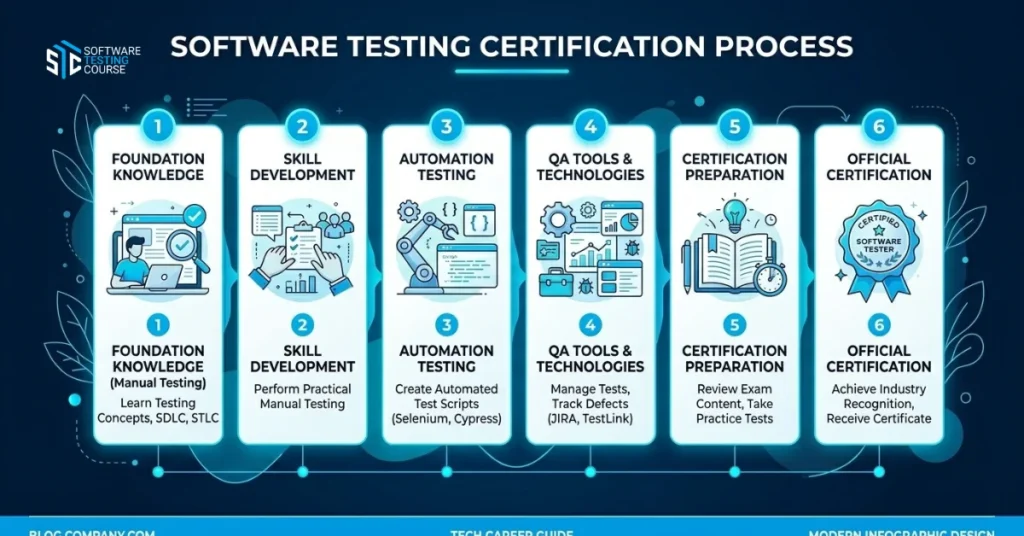
How to Approach the ISTQB CTFL v4.0 Exam in Australia
To approach the ISTQB CTFL v4.0 exam in Australia, focus on understanding the core syllabus, practicing sample questions, and managing your time effectively for personalized guidance, visit softwaretestingcourse.au or call 1800 159 151 today!
Step 1: Understand the Syllabus
Download the official ISTQB syllabus PDF from the ISTQB website. This is your roadmap. Knowing what’s covered and the depth required is half the battle.
Step 2: Enrol in Training
Look at the options for ISTQB training Australia. While there are face-to-face classes in Sydney, Melbourne, and Brisbane, there are also options for online classes. It is essential to note that your training should be based on the v4.0 syllabus.
Step 3: Practice with Mock Exams
Mock exams simulate the real test experience. Use them to:
- Identify weak areas
- Improve time management
- Get familiar with question formats
Step 4: Focus on Key Topics
Pay attention to the most tested topics:
- Testing fundamentals
- Test design techniques
- Test management principles
Prioritising these increases your chances of passing on the first attempt.
Study Tips for Australian Candidates
Here are some practical tips tailored for learners in Australia:
- Use Local Resources: Look for ISTQB exam centers Australia and regional study guides. This helps you understand local exam logistics.
- Join Study Groups: Online forums or local meetups can give insights and tips from fellow candidates.
- Stick to the Syllabus: Avoid random content outside the Foundation level testing syllabus. Focused study pays off.
- Review Regularly: Short, frequent review sessions work better than long, tiring study marathons.
Remember, software testing is logical and detail-oriented. Approach it like solving a puzzle rather than cramming facts.
Common Mistakes to Avoid
Even smart candidates slip up. Here’s what to watch for:
- Overlooking static techniques: Reviewing code and documentation is often underestimated.
- Ignoring test management: Some think testing is only about finding bugs. Not true!
- Skipping mock exams: Real exam practice is irreplaceable.
- Relying solely on training: Self-study and revision are crucial.
Where to Find ISTQB Resources in Australia
There are plenty of genuine resources:
- Official ISTQB website: Always your first stop for syllabus updates and exam registration.
- Local training providers: For hands-on workshops and guidance.
- Study guides and PDFs: Look for “ISTQB syllabus explained step by step” and “ISTQB study guide v4.0”.
- Online platforms: Our Websites offering ISTQB mock exams online can be very helpful.
After completing your ISTQB Foundation Certification, a smart next step is to go for the ISTQB Advanced Test Manager certification. It’s a globally recognised qualification that helps you build strong skills in test management, planning strategies, and handling real-world projects.
If you’re thinking about preparing for it, we’ve got the right expertise to guide you every step of the way. Feel free to reach out through the contact page on our website. We’re here to help you move forward with confidence.
The Role of Vigilance in Software Testing
The following is an account related to a tester who found a defect in the software through regular surveillance of the operation. It is partially verifiable. Testing a software involves various aspects related to logical reasoning, careful observation, and sometimes an element of luck. A good software tester is usually curious, has some perseverance, and an appropriate sense of humor, since the software sometimes behaves in a manner that is opposite to the functionality.
Why 2026 is a Great Year to Get ISTQB Certified
The software industry in Australia continues to grow. By 2026:
- Agile and DevOps adoption will be higher
- Automated testing will be standard practice
- Certified testers will be in demand for both local and international projects
Getting your ISTQB certification in Australia now positions you ahead of the curve. It’s not just a paper qualification; it’s proof you understand modern software testing standards. Many people ask about the ISTQB certification cost, which typically ranges from $199 to $249. An investment that can significantly boost your career prospects.
Conclusion
The ISTQB Syllabus, as described in the CTFL v4.0 document, acts as an entrance point to the domain of software testing. With the help of an in-depth understanding of the ISTQB Foundation Level Syllabus, following the guidelines of structured exam preparation, and utilizing genuine resources, individuals can help ensure successful exam outcomes and pave the way for a subsequent professional path.
Whether the goal is to acquire ISTQB training in Sydney, Melbourne, Brisbane, or even utilizing the Internet for instructional content, the key elements remain consistency and focus. This document offers an easy-to-understand roadmap for the year 2026 and beyond.
Testing has logical foundations, offers rewarding outcomes, and even involves humor at times. Therefore, it becomes essential to acquire the syllabus, begin the process of exam preparation, and follow the path to becoming a certified software tester in Australia.
Frequently Asked Questions
What does the ISTQB CTFL v4.0 exam cover?
The ISTQB CTFL v4.0 exam focuses on the key areas of the Foundation syllabus. It tests your knowledge in fundamental testing concepts, software testing across different life cycles, static techniques, various test design methods, management of tests, and the use of testing tools. Essentially, it ensures you have a strong grasp of the foundational principles in software testing, which is what the Foundation level qualification is all about.
How many questions are on the ISTQB Foundation Level exam, and what do I need to score to pass?
The exam consists of 40 multiple-choice questions, and you’ll have 60 minutes to complete them. To pass, you need to answer at least 26 questions correctly—this equals a score of 65%. If English isn’t your first language, you might be eligible for additional time to complete the exam.
Do I need any prerequisites to sit the ISTQB CTFL exam in Australia?
The great news is that no formal prerequisites are required for this exam! Anyone with an interest in software testing can take it. It’s a fantastic starting point for those new to the field or anyone looking to gain a recognised certification to advance their testing career in Australia.
Where can I take the ISTQB Foundation Level exam in Australia?
You can take the exam through accredited testing centres and exam providers Software Testing Course Australia. Whether you prefer attending an in-person classroom session or taking an online proctored exam from home, you have options. Be sure to check with local providers for the exact locations and dates available.
(Note: Specific testing locations can vary, so be sure to consult with Australian exam providers for the most up-to-date details.)
Is the ISTQB CTFL certification recognised internationally and in Australia?
Absolutely! The ISTQB Foundation Level certification is widely recognised, not just in Australia, but internationally too. It’s a well-respected qualification that demonstrates your understanding of core testing principles and terminology. This makes it a great way to boost your profile and stand out in the competitive software testing job market, whether you’re in Australia or abroad.
Ready to take the next step in your software testing career? At Software Testing Course Australia, we’re here to guide you every step of the way. Whether you’re looking for exam tips, course details, or just need a bit of advice, don’t hesitate to reach out!
Give us a call at 1800 159 151 for personalized guidance or visit our site to get started today. Let’s make your certification journey a success!