
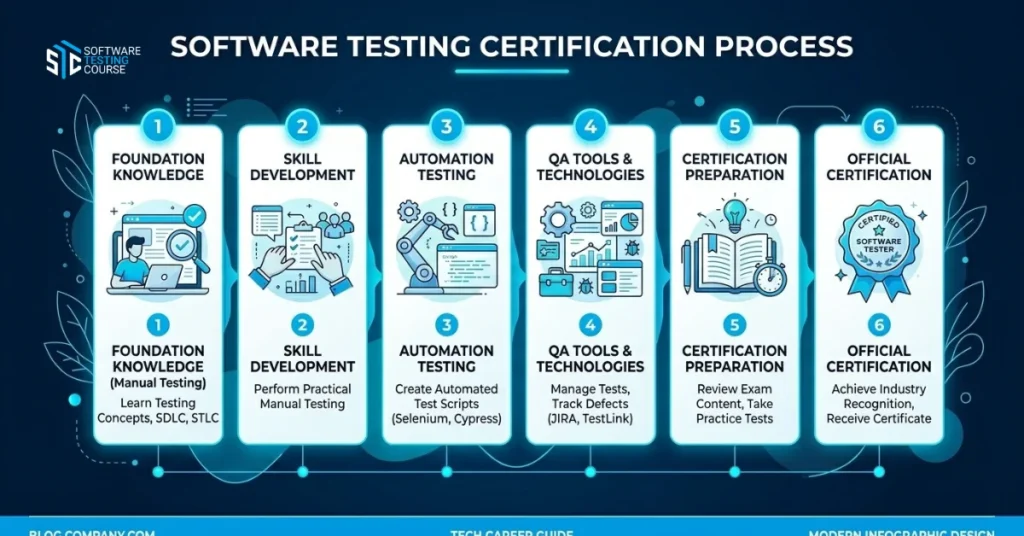
A Software Testing Certification is a structured, industry-recognised credential that confirms you can plan, execute, and manage software quality processes to a professional standard. For Australians looking to enter or progress in the tech industry, it is one of the most direct and cost-effective ways to become job-ready — without needing a computer science degree or years of prior experience. Certified testers are actively hired across banking, government, health tech, and SaaS companies in every major Australian city right now.
This guide will provide you with the truth behind obtaining such certifications, suitable paths to follow depending on your background, how much you need to invest, and the process of advancing from your initial training to a permanent position as a tester.
The Real Demand for QA Testers in Australia Right Now
Software QA isn’t just another specialised profession anymore. All companies that produce or buy software products – that applies to practically all sectors in Australia – require professionals capable of checking whether those products are ready for release. Be it superannuation applications or Medicare online solutions, the software quality requirements grow ever more stringent.
As shown in the ACS Digital Pulse 2024-2026 study, there remains a critical shortage of professionals skilled in software quality and testing in ICT workforce in Australia. The skills shortages can be clearly observed in such cities as Melbourne, Sydney, and Brisbane, where agile delivery teams are expanding fast and cannot afford to neglect testing cycles altogether.
What makes a good timing for embarking on a QA career is that, unlike most IT careers, you will not have a hard time entering the market because there are no prerequisites to becoming a QA professional – other than obtaining a formal QA testing certification, obviously.
What Earning a Software Testing Certification Means
Certification in this area is more than just obtaining a completion certificate after attending classes. Certification for a software tester means that you have obtained knowledge about the international framework that includes software testing approaches, its timing, roles, and defects tracking and fixing methods.
In Australia, there is a popular ISTQB (International Software Testing Qualifications Board) program, which is used to demonstrate software testing competency by acquiring their Foundation Level certificate (also called CTFL). If you want to find a job that requires QA certification, then this is the only type of certification that will be mentioned by Australian employers.
This certification program allows you to confirm your understanding of:
The basics of software testing and its key principles
- Software Development Life Cycle (SDLC) and software testing stages within it
- Testing processes, starting with software testing planning and ending with testing closure
- Testing cases design strategies such as boundary value analysis and equivalence partitioning
- Defect tracking, defect lifecycle, and classification
- Basics of functional, non-functional, and regression testing
- Writing software test plans and reports
There are some programs that not only offer traditional manual testing certification but also include automation testing certification training, such as using Selenium, API testing with Postman, or writing basic scripts.
ISTQB Certification Levels Explained
The ISTQB certification program consists of three levels. Those who wish to start a career in the field of quality assurance usually start with the Foundation Level and advance from there based on their gained experience.
| Certification Level | Who It’s For | What It Covers | Typical Study Time |
| Foundation (CTFL) | New testers, career changers, developers moving into QA | Testing principles, SDLC, test design, defect management | 6–12 weeks part-time |
| Advanced Level | Testers with 2–3 years of practical experience | Test management, technical testing, test analysis specialisation | 3–6 months depending on stream |
| Expert Level | Senior QA professionals and test leads | Process improvement, leading QA functions, test governance | Self-directed, experienced practitioners only |
It should be noted that the Foundation Level will be sufficient for most people reading this. This level will provide you with all the knowledge, terminology, and skills necessary to enter the profession and excel in junior/mid-level QA positions in Australia.
Manual Testing First — Here’s Why the Order Matters
One common pitfall while trying to research about QA courses is immediately opting for an automation testing course since it seems more interesting and lucrative. While this is not wrong on the face of it, it fails to realize the importance of manual testing before automation. Manual testing involves learning how to break down the feature of a software application to be able to understand the possible flaws in it.
The knowledge acquired through manual testing becomes the basis for writing automation tests later. A person who can write a good manual test case will not have trouble writing a good automated one either.
The manual testing certification course teaches the basics of QA thought, which include requirement analysis, documenting testing activities, and reporting defects systematically. Once these skills have been mastered, the use of automation can be an extension of what is already known.
At Software Testing Course Australia, the training program we offer is carefully designed to ensure that students learn the basic principles of manual testing before introducing them to automation tools. This approach follows the natural order in which QA practitioners operate in Australian organizations.
What You Actually Learn in a QA Course
All software testing training programs do not have equal value. The distinction between training programs that will land you a job and those that will simply provide a downloadable PDF for your LinkedIn profile comes down almost entirely to content and assessments.
Quality assurance certification training programs should incorporate both theory and practice. Below is a typical list of topics covered in a quality training program:
| Topic Area | What You Learn | Applied In |
| Testing Principles | Seven ISTQB principles, testing objectives and limitations | Every QA role from day one |
| Test Case Design | Equivalence partitioning, boundary value analysis, decision tables | Test plans, sprint reviews |
| Bug Life Cycle | Defect states, severity vs priority, resolution tracking | JIRA, Azure DevOps workflows |
| SDLC and STLC | Waterfall and agile testing integration, test phases | Agile teams, sprint ceremonies |
| Regression Testing | When and how to retest, scope management | Every release cycle |
| Automation Basics | Selenium testing, API testing with Postman, framework structure | Automation engineer roles |
| Performance Testing | Load and stress testing concepts, JMeter fundamentals | Performance engineer pathway |
What sets apart training programs worth your investment is their hands-on projects component. Participating in a complete test cycle on an actual project, preparing test documentation, and defect logging in a tooling environment are the distinctions between ready-to-work graduates and video-watching individuals.
Software Testing Certification Costs in Australia
There are significant variations in pricing amongst the various companies in Australia, and it is best to be aware of what you get from different price points. Sometimes, cheap doesn’t necessarily mean good, just like expensive does not equate to complete.
| What You’re Paying For | Typical AUD Range | Notes |
| Core QA training course | $900 – $2,800 | Duration, delivery format, and mentoring support affect price |
| ISTQB Foundation exam fee | $260 – $360 | Paid directly to the exam body; separate from course fees |
| Practice exams and study guides | $0 – $180 | Better courses include these in the enrolment fee |
| Automation testing module | $600 – $1,800 | Selenium, Postman, API testing frameworks |
| Career support / resume review | Included – $300 | Often bundled in job-readiness focused programs |
It is important to inquire from the provider whether the fee covers the cost of the course and whether there is a provision for revisiting the course material should there be the need to do so after the training period. Those providers who can answer such queries are most likely the best to invest in.
Talk to Us Before You Enrol Anywhere
Our experts from SoftwareTestingCourse.au will explain to you what is included in our courses, what results our graduates achieve, and what certification program fits you best based on your existing experience.
📞 Call 1300 649 299 See Our Programs →
The QA Career Path: Roles and What They Pay
The more realistic question that people ask before joining a software testing course is the obvious one of what it leads to. The path for a QA engineer is far more diverse than many people think, and the income possibilities at a medium to advanced level are quite attractive indeed.
| Role | Experience Level | Typical AUD Salary | Core Focus |
| Junior QA Analyst | Entry (0–1 yr) | $52,000 – $72,000 | Manual testing, defect logging, test case writing |
| QA Analyst / Test Analyst | Mid (1–3 yrs) | $72,000 – $95,000 | Test planning, regression, some automation |
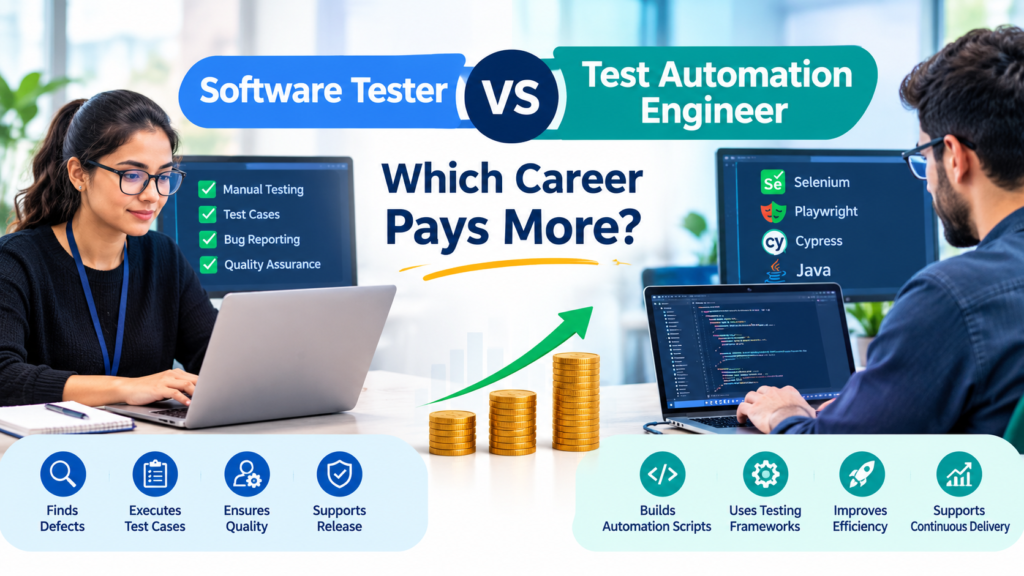
| Automation Test Engineer | Mid–Senior (2–5 yrs) | $90,000 – $120,000 | Selenium, CI/CD pipelines, automated test suites |
| Performance Test Engineer | Mid–Senior | $95,000 – $125,000 | Load testing, JMeter, infrastructure stress testing |
| QA Lead / Test Manager | Senior (5+ yrs) | $110,000 – $145,000 | Strategy, team management, quality governance |
| SDET | Senior (Dev background) | $120,000 – $155,000 | Testing within the development pipeline, tooling |
Promotion from junior level to mid-level positions normally occurs through the acquisition of automation testing competencies on top of your existing manual testing skills. This is why the majority of practicing QA professionals, having earned a certification in manual testing, go back after 12–18 months to gain additional automation training.
How to Become a QA Tester: A Step-by-Step Path
From novice to a QA analyst in employment in Australia, there is a clear path to follow:
Choose the right course — not necessarily the cheapest: Find yourself a course offering the ISTQB Foundation Level content and project work, including the use of the real QA software tools. As a beginner software tester, it is expected that your course equips you with the skill of writing test cases and logging defects rather than knowing the definitions only.
Sit the ISTQB Foundation Level exam: That is the recognised certificate among the Australian employers. If it’s a good structured course, both theoretical and practical aspects will be covered together instead of being done sequentially.
Build a testing portfolio during your course: Keep the documents of test plans and test cases, bug logs, and scripts. This portfolio will serve as evidence to prospective employers.
Apply for entry-level QA roles while your course is still fresh: Entry-level Junior QA Analyst jobs in Melbourne, Sydney, Brisbane, and Perth usually favor certified students with zero experience against non-certified individuals with IT background. Timing will be critical here.
Add automation skills in your first 12–18 months: Once you start working, the next step will be Selenium testing and API testing. This will elevate you from the $65K-$75K salary level to the $90K-$110K pay scale in far less time than experience would alone.
Online QA Certification: What to Expect in 2026
Most Australians take their QA certification courses online these days, and the online delivery process has seen a considerable improvement during the last few years. In terms of software testing, online courses work perfectly fine because most of the work is performed from a computer screen.
However, one must know the difference between online classes that require you to participate in interactive classes and online courses that are nothing but a compilation of recorded videos. Some of the things that one should look for in an online QA certification course include:
- Live sessions or instructor-led components — not just passive video watching
- Hands-on lab environments where you run real test scenarios
- Mentor or tutor access for questions and feedback on your work
- Cohort-based or scheduled delivery — accountability structures help completion rates
- Career support including resume guidance and interview preparation
Online delivery suits people who are already working full-time and studying after hours. The key question to ask any provider is not “can I study online?” — almost every course now says yes — but “what does my instructor actually do for me, and when can I reach them?”
Students from Melbourne, Sydney, Perth, Brisbane, Adelaide, and regional areas all study online with us at SoftwareTestingCourse.au. Our programs are built for people who are balancing study with work and family — not for full-time students with nothing else on.
Common Mistakes People Make Choosing a QA Course
The market of short courses in Australia has been developing quite rapidly recently, but there are still instances when a certain number of educational institutions do not provide their learners with adequate quality for the money they charge. Below are some pitfalls to consider prior to making your purchase decision:
- Making a choice based only on cost. Such a strategy usually implies cutting off the most crucial components of a course such as mentoring, practical experience and career-related aspects, which means paying too much for a cheaply priced course with no result.
- Joining an automation testing course without taking manual testing one beforehand. It will make you miss out on important information you need in order to understand automation fully.
- Not checking whether the course corresponds to the ISTQB Foundation Syllabus. This means that you may fail to gain the knowledge needed for passing the exam in question.
- Failing to look for post-course assistance. It should be taken into account whether or not you are going to get any help after completing the course – for example, a resume check and mock interviews.
- Not asking about student outcomes. The best program will be one where the provider knows where its graduates are working. If they don’t even know that, there is something to say about that program.
Is Certification Enough — or Do You Need More?
The certification process will ensure that your application is shortlisted for consideration. The elements that make you succeed in your interview and get hired are having an industry-recognized certification, proving your ability to use it in practical situations, and being able to explain your testing process in conversation with a prospective employer.
An entry-level employer does not expect you to have three years of experience doing the job. What he wants from you is proof that you know the QA process, that you are capable of using the testing tools, and that you do not need anything explained to you in terms of software quality.
A course that includes real test documentation, tool exposure, and portfolio outputs gives you all three. A course that is purely theory-based gives you only the credential — and that gap shows up clearly when employers ask you to walk them through a test case you have written.
Ready to Take the First Step?
Get in touch with the SoftwareTestingCourse.au team today. We’re based in West Melbourne and support students across every state. Ask us about course content, intake dates, and what our graduates are doing now.
📞 1300 649 299 Browse Our Courses →
Frequently Asked Questions
Do I need an IT background to start a QA course?
No prior IT experience is required. A beginner software testing course is designed for career changers and people new to tech. Strong attention to detail, logical thinking, and good written communication matter far more than technical knowledge at the start.
How long does a QA certification take in Australia?
Most Foundation-level programs run between 8 and 14 weeks at a part-time pace. If you include ISTQB exam preparation and any automation add-on module, you are typically looking at 4 to 6 months from start to fully certified.
Is ISTQB recognised by Australian employers?
Yes — it is the most widely referenced testing credential in Australian job ads across banking, telecommunications, government technology, and SaaS companies. It is internationally portable, which means it is also valid if you ever work or travel abroad.
What is the difference between manual and automation testing?
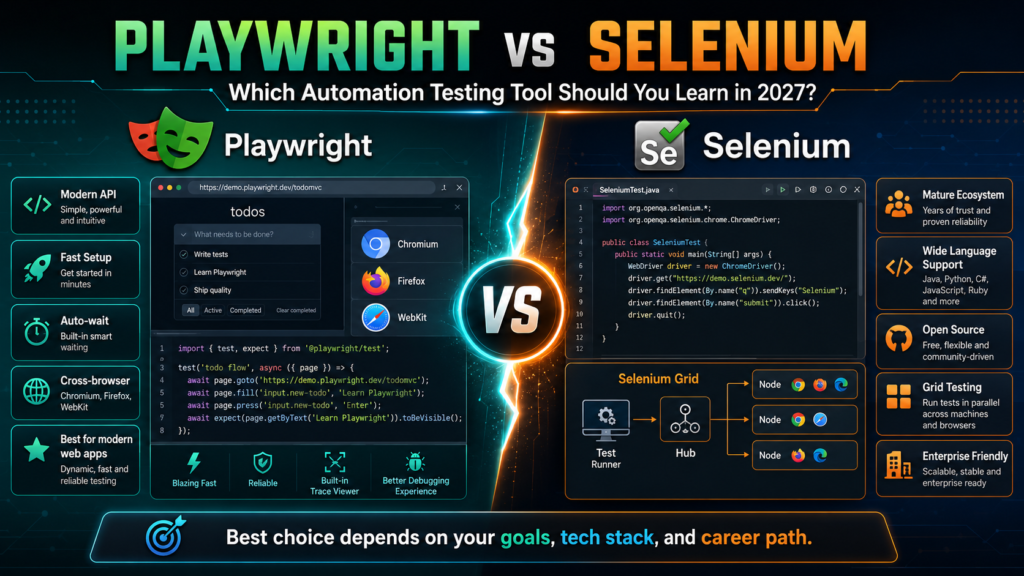
Manual testing is the process of executing test cases by hand — a tester interacts with the software and checks whether it behaves as expected. Automation testing uses code and tools like Selenium to run those checks automatically, repeatedly, and at scale. Most QA roles in 2025 expect some knowledge of both.
Can I complete QA certification fully online?
Yes. Online testing courses in Australia are accessible from any state or territory and are now the standard delivery method. Whether you are studying from Melbourne, Sydney, Perth, Brisbane, or a regional area, you can complete a full certification program online with the right provider.
What tools will I learn in a software testing course?
A solid course covers JIRA for defect tracking, Postman for API testing, Selenium for web automation, JMeter for performance testing basics, and Git for version control in team environments. Hands-on tool experience during training is what makes the difference when applying for your first role.