

If you’ve been searching how to get a software testing job without experience, you’ve probably noticed the same frustrating loop as every other entry-level tech field: every listing wants “1-2 years experience” for a role labelled “junior.” The good news is that software testing is genuinely one of the more accessible entry points into IT it rewards attention to detail, curiosity and clear communication more than a long resume.
This guide walks through exactly how to get a software testing job without experience in Australia, step by step, whether you’re based in Melbourne, Sydney, Brisbane, Perth, Adelaide or Canberra.
Why Software Testing Is a Realistic Entry Point Into IT
Software testing (QA) roles focus on finding problems before customers do checking that features work as expected, documenting defects clearly, and thinking through edge cases most people would miss. None of that strictly requires a computer science degree. Employers are often more interested in candidates who are methodical, sceptical and thorough than candidates who simply have a longer job history.
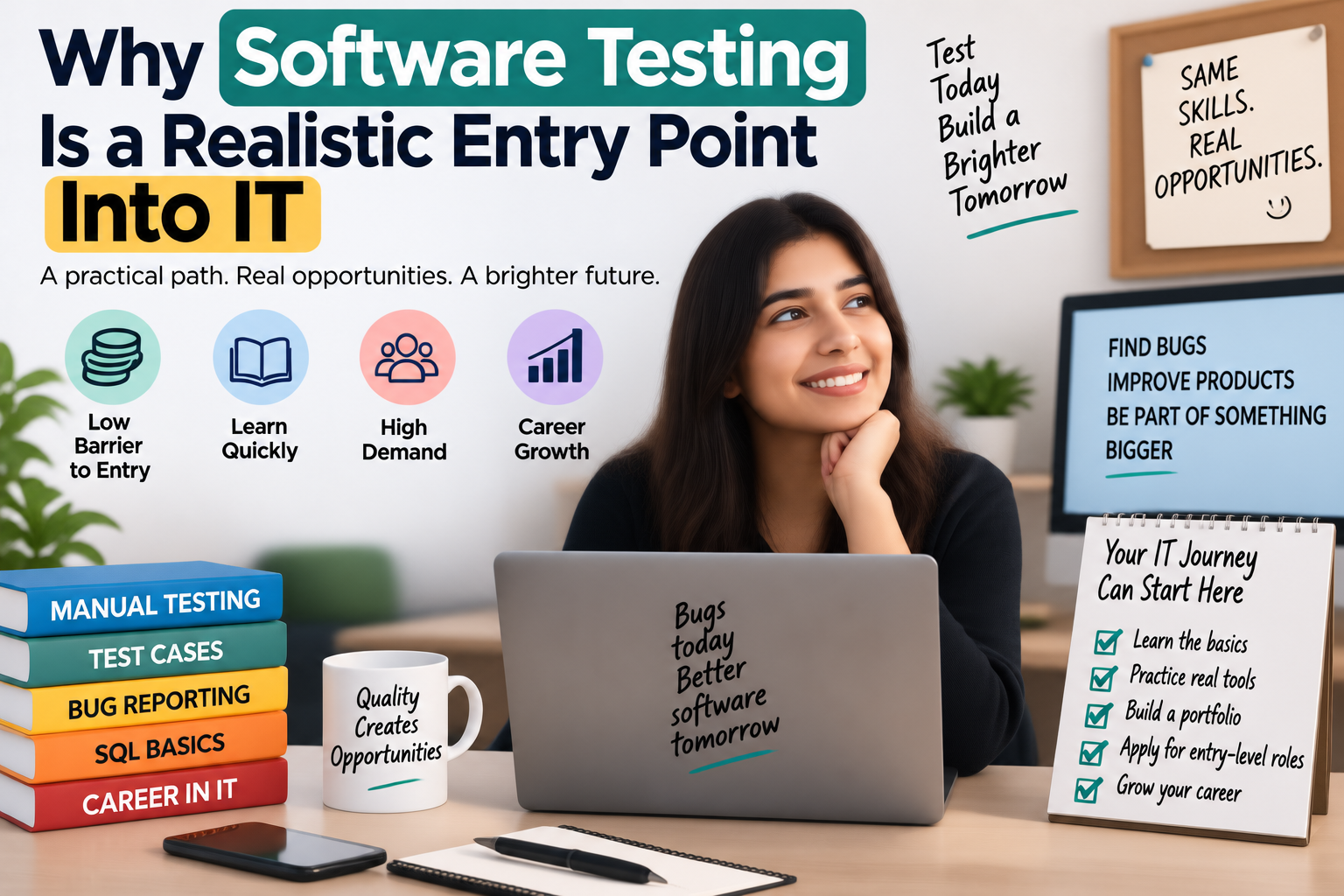
What actually gets you hired without experience is proof that you understand testing fundamentals and can apply them not a job title.
Step 1: Get a Recognised Software Testing Certification
A certification is the fastest way to prove baseline QA knowledge when you don’t have a testing job history yet. The industry-standard starting point in Australia and globally is the ISTQB Foundation (CTFL v4.0) Course, which covers the fundamentals of the software testing life cycle, test design techniques and defect management that almost every QA job ad references directly.
- Start with ISTQB Foundation if you’re completely new to software testing.
- Add the Intro to Automation Testing (AUTO-101) course once you’re comfortable with manual testing basics.
- Consider Selenium Testing Foundation Certification if you want to stand out for automation-leaning junior roles.
You can view the full Intro to Automation Testing (AUTO-101) and Selenium Testing Foundation Certification course pages to compare what each covers.
Step 2: Build Real Testing Experience Before You Have a Job Title
This is the step most beginners skip, and it’s the one that actually gets interview callbacks. You don’t need a paid role to start practising QA work:
- Write formal test cases for a free app or website you use regularly, and document the bugs you find.
- Practise using real QA tools such as JIRA for defect tracking, TestRail for test case management, and Postman for API testing.
- Join open-source projects that welcome testers, or offer to test a friend’s small business website or app.
- Build a simple portfolio a document or spreadsheet showing test cases, bug reports and testing summaries.
A candidate who can walk an interviewer through five real test cases and two clearly written bug reports stands out immediately from a candidate with a certificate and nothing else.
Step 3: Rebuild Your Resume Around QA-Relevant Skills
If your background is in admin, customer service, data entry, teaching or quality control, don’t hide it reframe it. Attention to detail, following structured processes, and documenting issues clearly are exactly what QA work demands.
- List your ISTQB or automation certification at the top of your resume.
- Add a short ‘Testing Projects’ section showcasing self-driven or volunteer QA work.
- Reframe past roles around accuracy, process-following and problem documentation.
- Mirror the language from real job ads test case design, defect management, regression testing, STLC.
Step 4: Target the Right Entry Points
Very few companies advertise a role called exactly “Junior Tester” so widen your search:
- QA Analyst, Test Analyst, Software Tester and UAT Tester roles at the associate or graduate level
- Contract or short-term testing roles during release crunches, which often carry a lower experience bar
- Internal transfers moving from support, operations or admin into a QA team once you’re already inside a company
- Startups and small businesses, which are often more open to certified beginners with a strong portfolio than large enterprises
Step 5: Prepare for Scenario-Based QA Interviews
QA interviews rarely test textbook definitions alone they test how you’d approach real testing problems: how would you test a login form, how would you prioritise limited testing time before a release, how would you write a bug report a developer can actually act on. Practise these out loud using the vocabulary from your certification training, backed by examples from your own test cases and bug reports.
How Structured Training Speeds This Up
This is exactly why a properly structured Software Testing Course matters for beginners it doesn’t just prepare you for a certification exam, it builds hands-on experience with manual testing, test case design, bug tracking tools, Selenium automation and real-world QA projects, so first-time candidates walk into interviews with actual testing work to discuss, not just a certificate.
You can browse the full course list, including intermediate pathways like the ISTQB Agile Tester Extension and Mobile Application Testing (CT-MAT) courses, to plan your next step once you’ve landed your first role.
Training Available in Every Major Australian City
Flexible instructor-led and online training is available for beginners in Melbourne, Sydney, Brisbane, Perth, Adelaide, Canberra, as well as Hobart and Australia-wide online. See the full locations page for options near you.
What the Job Market Says About Entry-Level QA Roles
Demand for software quality remains steady across Australia’s technology, finance, healthcare and government sectors as more organisations ship software faster and need testing to keep pace. Certification guidance from ISTQB and Australian job-market listings on SEEK consistently show entry-level QA and test analyst roles among the more accessible paths into the technology sector, especially for certified candidates who can demonstrate practical testing work.
7-Step Checklist to Land Your First Software Testing Role
- Complete the ISTQB Foundation certification.
- Practise manual testing on a real app and document your test cases and bugs.
- Learn the basics of JIRA, TestRail and Postman.
- Rebuild your resume around QA-relevant, transferable skills.
- Apply to QA Analyst, Test Analyst and UAT Tester roles, not just ‘Junior Tester’ titles.
- Practise scenario-based interview answers out loud.
- Follow up on every application and keep applying consistently.
Frequently Asked Questions
Can I really get a software testing job with no experience?
Yes software testing is one of the more accessible entry points into IT, particularly when paired with a recognised certification like ISTQB Foundation and a small portfolio of self-driven testing work.
Do I need to know how to code to become a software tester?
No, not for manual testing roles. Coding becomes more relevant if you move into automation testing later, but many QA Analyst and Test Analyst roles focus on manual testing, test case design and defect management.
Which certification should beginners start with in Australia?
The ISTQB Foundation (CTFL) certification is the standard starting point, recognised by employers across Australia and internationally as proof of core software testing knowledge.
Start Your Software Testing Career Today
Getting a software testing job without experience in Australia comes down to preparation, not luck a recognised certification, demonstrated practical testing work, and a resume that speaks the language employers are searching for. Explore the full Software Testing Course range, browse courses, read the blog, check the FAQs, or contact the team to find the right pathway into QA in your city.