

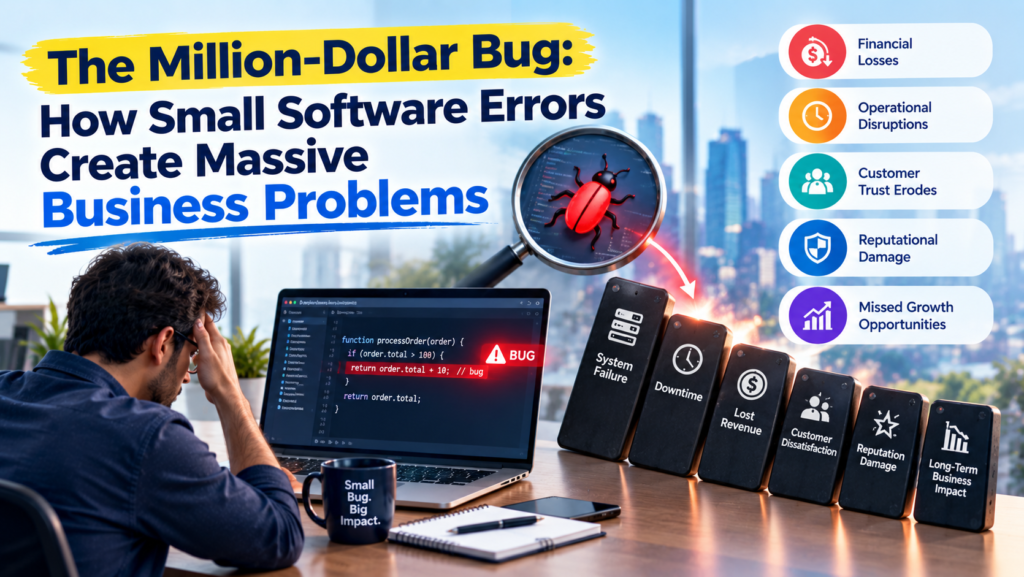

The cost of software bugs is almost never measured by the size of the bug. A missing check, a wrong setting or an untested update can be a few lines of code, yet it can cost a business millions of dollars, damage its reputation and take days to recover from. That is the million-dollar bug: a tiny error with an enormous consequence.
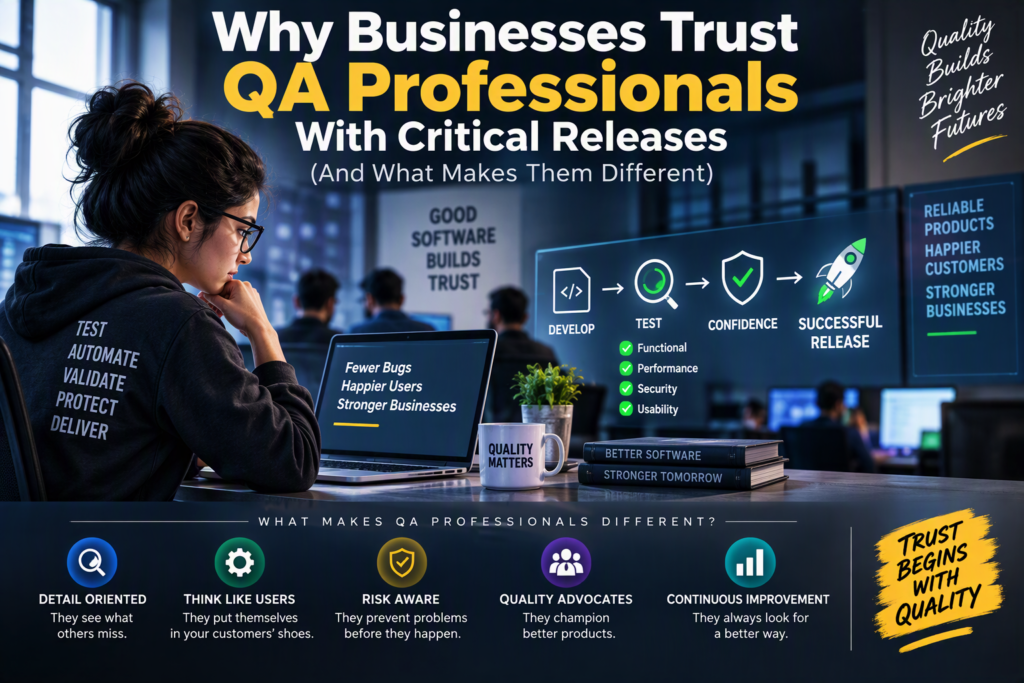
This article looks at why small mistakes escalate so quickly, what real incidents tell us about the cost of software bugs, and how good software testing protects Australian businesses. If you are thinking about a QA career, it also shows why testers are among the most valuable people on a software team.
What Is a Million-Dollar Bug?
A million-dollar bug is any defect whose business impact is far larger than its technical size. It might be a rounding error in a billing engine, a configuration change pushed to the wrong environment or a feature that works perfectly until real customers use it in a way nobody tested. The code change is small. The blast radius is not.
These bugs share a pattern. They slip through because nobody looked in the right place, they are triggered at scale, and they reach customers or markets before anyone can react. Understanding that pattern is the first step in reducing the cost of software bugs in your own projects.
Real-World Examples of the Cost of Software Bugs
The best-documented example is Knight Capital in 2012. According to the company’s own filing with the US Securities and Exchange Commission, a problem linked to the installation of new trading software caused the firm to send a flood of erroneous orders into the market, and it ended up with a realised pre-tax loss of about US$440 million. One software release turned a healthy trading firm into one that needed emergency funding to survive.
More recently, a faulty software update from a security vendor crashed Windows machines around the world in July 2024, disrupting airlines, banks and hospitals, including here in Australia. Nobody set out to cause an outage. A change that was assumed to be safe reached millions of devices, and the cost of software bugs became visible to everyday people at check-in desks and hospital front counters.
The pattern also shows up in research. A widely cited 2002 NIST study of software testing infrastructure estimated that inadequate testing cost the US economy between roughly US$22 billion and US$60 billion a year, and found that more than half of bugs were not discovered until later in development. The numbers are old, but the lesson has only become more relevant as software has spread into every industry.
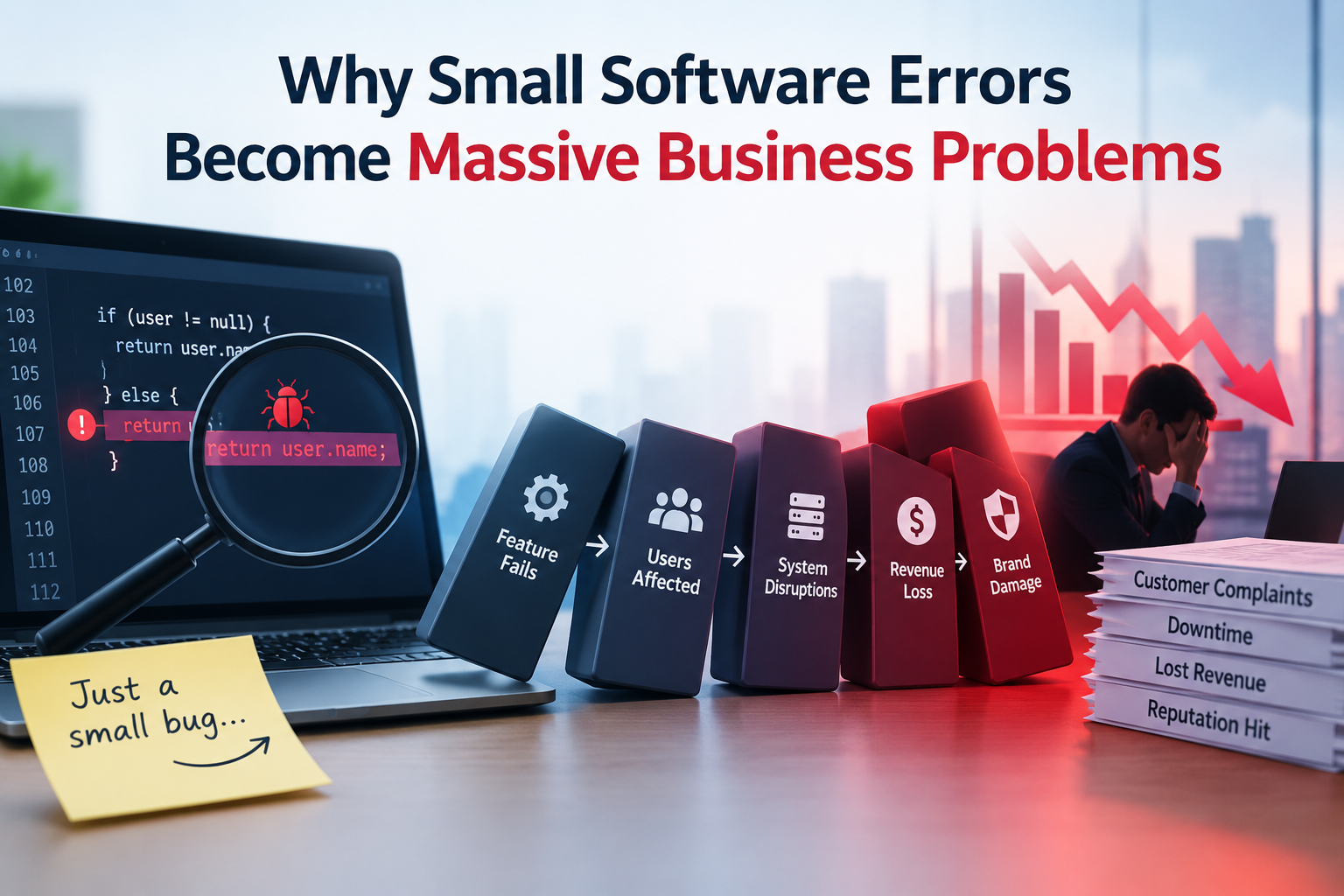
Why Small Software Errors Become Massive Business Problems
Bugs do not need to be complicated to be expensive. These five forces turn small errors into big invoices.
1. Software multiplies mistakes
A human error affects one transaction. A software error repeats that mistake thousands of times per second. Automation, the very thing that makes software valuable, also makes bugs scale instantly.
2. Late discovery costs more
A defect found while reviewing requirements costs a conversation to fix. The same defect found in production costs an incident response, developer time, customer support, and sometimes compensation. The later a bug is found, the higher the cost of software bugs becomes.
3. Modern systems are deeply connected
Applications rely on APIs, cloud services, payment gateways and third-party libraries. A small fault in one component can travel through the whole chain. Testing a screen in isolation is no longer enough; teams need to test how systems behave together.
4. Speed pressure hides risk
Agile and DevOps teams release often, which is a good thing. The risk appears when release speed increases but testing discipline does not. Skipping regression checks to hit a date is one of the most common ways a small bug reaches customers.
5. No safety net after release
Even well-tested software can fail. Teams without monitoring, feature flags and rollback plans take much longer to contain an issue. The cost of software bugs grows every minute a faulty release stays live.
How the Cost of Software Bugs Grows at Each Stage
The table below shows why finding defects early is one of the best investments a business can make.
| Stage | What fixing a bug involves | Relative cost |
| Requirements and design | A conversation and an updated document | Low |
| Development | Developer fixes and re-checks the code | Low to medium |
| Testing | Defect logged, fixed, retested and regression checked | Medium |
| Production | Incident response, hotfix, support and customer communication | High |
| After a public failure | Financial loss, regulatory attention and damaged trust | Very high |
The Hidden Costs of Software Bugs
Direct financial loss is only part of the story. Most businesses underestimate these hidden costs.
| Cost type | What it looks like |
| Downtime | Lost sales, stalled operations and idle staff while systems are unavailable |
| Customer churn | Users abandon apps and services that fail them, and rarely return |
| Rework | Developers pulled off new features to fix old problems |
| Compliance and legal | Regulatory attention, contract penalties or compensation claims |
| Brand damage | Negative reviews, media coverage and lost trust that take years to rebuild |
| Staff morale | Burnout from repeated emergency releases and late-night fixes |
How Software Testing Reduces the Cost of Software Bugs
Testing is not a final checkbox. It is a set of practices that reduce risk at every stage. Teams that consistently lower the cost of software bugs tend to do these things well:
- Review requirements early. Testers challenge unclear or contradictory requirements before any code is written.
- Test by risk. Effort goes first to the features where failure would hurt most, such as payments, security and data integrity.
- Automate regression checks. Automated suites, often built with Selenium, catch old bugs returning after new changes.
- Test APIs and integrations. Tools such as Postman check how systems talk to each other, not just how screens look.
- Use exploratory testing. Skilled testers look for unexpected behaviour that scripted tests never cover.
- Gate releases in CI/CD. Automated quality checks stop a failing build from reaching production.
Skills Australian Employers Want to Cut the Cost of Software Bugs
Businesses that understand the cost of software bugs invest in testers who combine solid fundamentals with practical tool skills. If you want to build that profile, these software testing courses are a strong place to start:
- ISTQB Foundation (CTFL v4.0): the recognised baseline for testing terminology, techniques and process.
- Intro to Automation Testing and Selenium Testing Foundation: build the automation skills employers ask for.
- ISTQB Agile Tester Extension: testing inside fast-moving Agile teams.
- ISTQB Mobile Application Testing (CT-MAT): specialist skills for app quality.
- ISTQB AI Testing (CT-AI) and Advanced Test Analyst: for testers moving into specialist and senior roles.
Not sure where to begin? Speak with an advisor through our contact page or browse more career articles on the software testing blog.
The Cost of Software Bugs Across Australian Cities
Every major city has industries where a defect can be expensive. This table shows where testing talent tends to matter most, with links to local training options.
| City | Where bugs carry high risk | Training options |
| Sydney | Banking, fintech, insurance and e-commerce | Software testing course in Sydney |
| Melbourne | Telecommunications, health technology, retail and logistics | Software testing course in Melbourne |
| Brisbane | Government services, infrastructure and tourism platforms | Software testing course in Brisbane |
| Perth | Resources, energy and industrial systems | Software testing course in Perth |
| Canberra | Federal government digital services and defence | Software testing course in Canberra |
| Adelaide | Defence, health and state government platforms | Software testing course in Adelaide |
Based in Hobart, Darwin or a regional area? Live online learning is available across Australia. See all training locations.
A 7-Point Checklist to Reduce the Cost of Software Bugs
Whether you lead a team or work in QA, use this checklist before your next release.
- Are the requirements clear, testable and agreed by everyone?
- Have the highest-risk features been tested first?
- Does a regression suite cover the areas near your changes?
- Have integrations and APIs been tested end to end?
- Has the release been tried in an environment that mirrors production?
- Is there monitoring in place, and can you roll back quickly?
- Does someone with testing skills have the authority to say “not yet”?
Even improving two or three of these points will reduce the cost of software bugs in your organisation.
Cost of Software Bugs FAQs
What is the cost of software bugs to a business?
It includes direct losses, downtime, rework, compliance issues and lost customer trust. The cost of software bugs varies widely, from a few hours of developer time to losses in the hundreds of millions, depending on when the bug is found and how many people it affects.
Why is fixing bugs later more expensive?
Later fixes involve more people, more testing and more risk. A defect caught in requirements review needs a discussion. One found in production needs an incident response, a hotfix and customer communication.
Can testing stop every bug?
No. Testing reduces risk rather than eliminating it. The goal is to find the most important defects early and to make sure a failure can be detected and contained quickly.
Is software testing a good career in Australia?
Yes. As software becomes central to every industry, employers need people who can protect quality. Testers with ISTQB foundations and automation skills are well positioned to grow into senior QA and test analyst roles.
Can I learn software testing online?
Yes. Live online and instructor-led options are available across Australia. Visit our FAQs page or talk to a course advisor to choose a pathway.
Prevent the Next Million-Dollar Bug
Small errors will always exist. What separates resilient businesses from vulnerable ones is how early they find them. Understanding the cost of software bugs is the first step, and building testing skills is how you turn that awareness into protection.
If you are ready to start or grow a QA career, explore our software testing courses in Australia or call 1300 649 299 to speak with a course advisor. Great testers stop million-dollar bugs before customers ever see them.