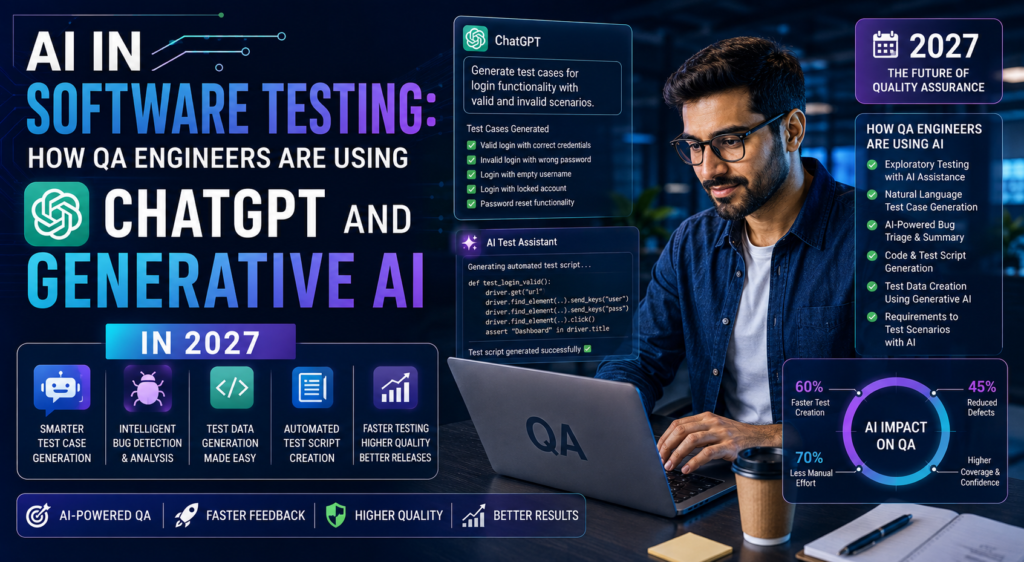


AI in software testing has moved well past the experimental stage. Industry surveys through 2026 show the large majority of quality engineering teams are now piloting or actively running generative AI inside their testing workflows, and by 2027 it’s simply part of how a modern QA engineer works not a novelty tool bolted on the side. If you’re a tester wondering whether ChatGPT and generative AI are about to replace your job, or a business trying to work out what “AI-assisted QA” actually means day to day, this guide covers exactly how testers are using these tools right now.
What “AI in Software Testing” Actually Means in 2027
AI in software testing covers a broad set of applications: generating test cases from user stories and requirements, writing and maintaining automation scripts, prioritising which tests to run based on risk, self-healing test suites that adapt when a UI element changes, and validating the growing volume of AI-generated application code itself. It isn’t one tool — it’s a layer that now sits across almost every stage of the QA lifecycle.
How QA Engineers Are Actually Using ChatGPT and Generative AI
1. Generating and Reviewing Test Cases
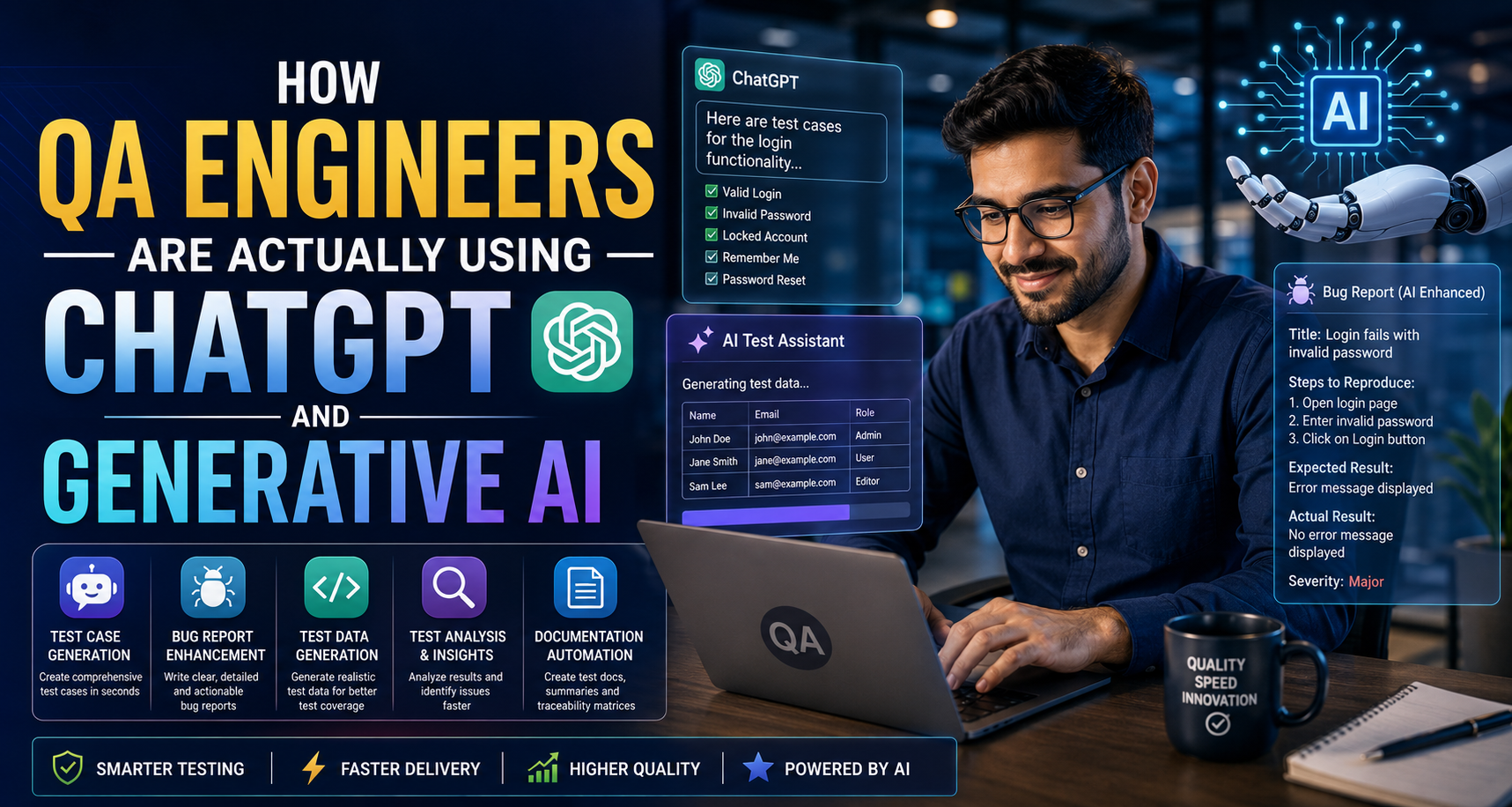
Testers increasingly feed user stories, acceptance criteria or a feature description into ChatGPT or a similar model and get back a structured first draft of test cases — including edge cases a rushed manual pass might miss. The tester’s job shifts from writing every case from scratch to reviewing, correcting and prioritising what the model produces.
2. Writing and Maintaining Automation Scripts
Generative AI tools help testers scaffold Selenium, Playwright or Cypress scripts faster, and self-healing automation frameworks now use AI to automatically update broken selectors when a developer renames or moves a UI element — cutting down on the maintenance overhead that used to eat a huge share of QA time.
3. Generating Realistic Test Data
AI-powered tools can generate synthetic test data that behaves like real customer data without containing any actual personal information, which is especially useful for teams working under strict data-privacy requirements.
4. Validating AI-Generated Code
With a significant share of production code now AI-assisted or AI-generated, QA teams have picked up a new responsibility: specifically testing for the logic errors, security flaws and edge-case failures that AI-written code is statistically more likely to introduce. This has become one of the fastest-growing specialisations inside quality engineering.
5. Risk-Based Test Prioritisation
Rather than running the full regression suite every time, AI models now help teams prioritise which tests matter most for a given change, based on historical defect data and business impact — a shift from “run everything” to “run what matters.”
Does AI Replace QA Engineers, or Change the Job?
The data points firmly toward the second answer. Generative AI writes faster than any human tester, but it still needs judgement, context and validation from a real person — a point most industry researchers and testing leaders repeat consistently through 2026. AI drafts; QA engineers review, catch what the model missed, and decide what “good enough” actually means for the business. The QA engineers moving up fastest are the ones treating AI fluency as a core skill, not a threat.
Skills QA Engineers Need for the AI-Driven Testing Era
- Prompt writing for test-case generation, bug reports and test documentation.
- Reviewing and validating AI-generated test cases and automation scripts for accuracy.
- Working knowledge of self-healing automation tools (Selenium, Playwright, or AI-native platforms).
- Risk-based test prioritisation and reading AI-driven test analytics dashboards.
- Understanding how to test AI-generated application code for logic and security flaws.
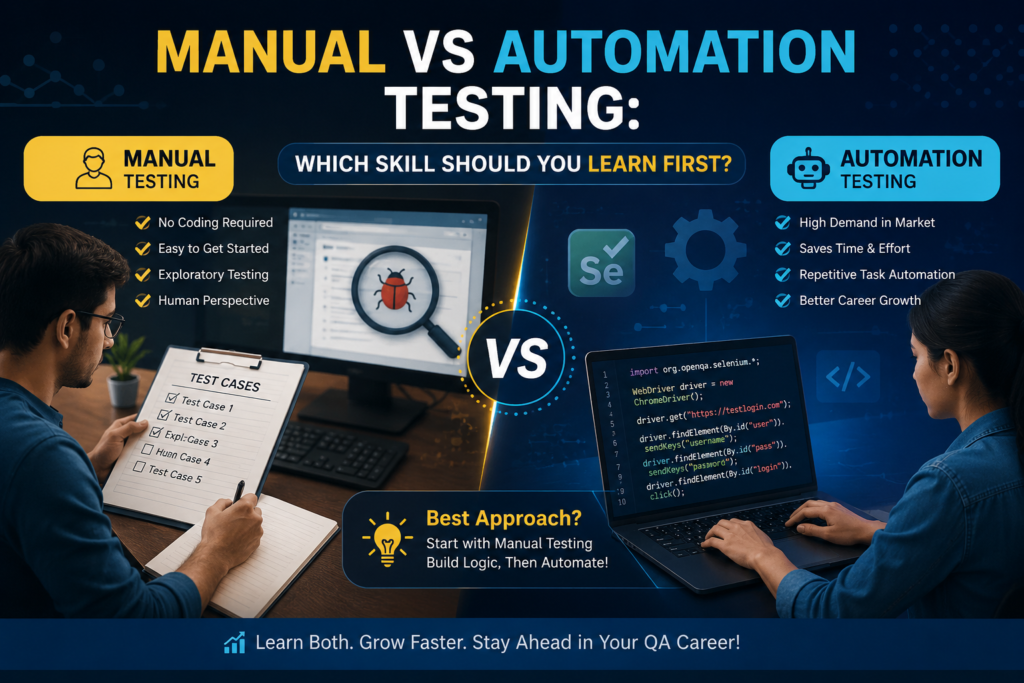
- A solid manual and automation testing foundation — AI accelerates a skilled tester, it doesn’t replace testing knowledge.
Is ISTQB Certification Still Worth It in the Age of AI Testing?
Yes — arguably more than before. ISTQB gives testers the structured testing fundamentals that AI tools assume you already have; without them, it’s hard to properly review what a model produces. Build that foundation with our ISTQB certification training, then layer in practical skills through our manual testing course and automation testing course, which now include AI-assisted testing workflows as part of the curriculum.
AI in Software Testing: City-by-City Demand Across Australia
| City | What’s Driving Demand |
| Sydney | Financial services and enterprise SaaS firms leading AI-QA adoption nationally |
| Melbourne | Strong demand for testers who can validate AI-generated code in retail and fintech platforms |
| Brisbane | Growing government and health-tech testing teams adopting AI-assisted regression testing |
| Perth | Mining-tech and logistics platforms investing in AI-driven test automation |
| Adelaide | Defence and public-sector testing roles increasingly requiring AI-testing literacy |
| Canberra | Government agencies formalising AI-in-QA policy and compliance testing requirements |
Build Your AI-Ready QA Career with Logitrain
Logitrain delivers instructor-led manual testing, automation testing and ISTQB certification training across Sydney, Melbourne, Brisbane, Perth, Adelaide and Canberra, both in-person and live online, with AI-assisted testing tools covered throughout. See the full course calendar at logitrain.com.au or contact our team to plan your next certification.
FAQs: AI in Software Testing
Will AI replace software testers?
Unlikely in the near term. AI accelerates test creation and maintenance, but validating, prioritising and interpreting results still requires human judgement which is why demand is shifting toward AI-fluent testers rather than shrinking overall.
What is generative AI used for in QA?
Generating test cases from requirements, writing and maintaining automation scripts, producing synthetic test data, and helping prioritise which tests to run based on risk.
Do I need to learn to code to use AI in software testing?
Not necessarily for manual testing roles, but automation and AI-assisted testing roles increasingly expect at least a working knowledge of scripting and test frameworks.
Is ISTQB certification still relevant with AI tools available?
Yes — ISTQB gives testers the fundamentals needed to properly review and validate what AI tools generate, which becomes more important, not less, as AI adoption grows.
What’s the biggest risk of using ChatGPT for testing?
Treating AI output as final rather than a draft. Generative AI can miss edge cases or produce plausible-looking but incorrect test logic, so review and validation remain essential.