

If you’re weighing up a move into software quality assurance, the QA Engineer salary Australia is one of the strongest reasons to make the jump. Demand for testers, automation engineers and QA analysts has grown steadily across banking, government, retail and health tech, and salaries have climbed with it. This guide breaks down what QA Engineers actually earn across Sydney, Melbourne, Brisbane, Perth, Adelaide and Canberra in 2026, the career path from junior tester to QA lead, the skills employers screen for, and the ISTQB certifications that move your resume to the top of the pile.
Whether you’re a complete beginner, a career changer, or a manual tester ready to specialise in automation, this is the practical roadmap — not a generic overseas salary list.
QA Engineer Salary Australia by Experience
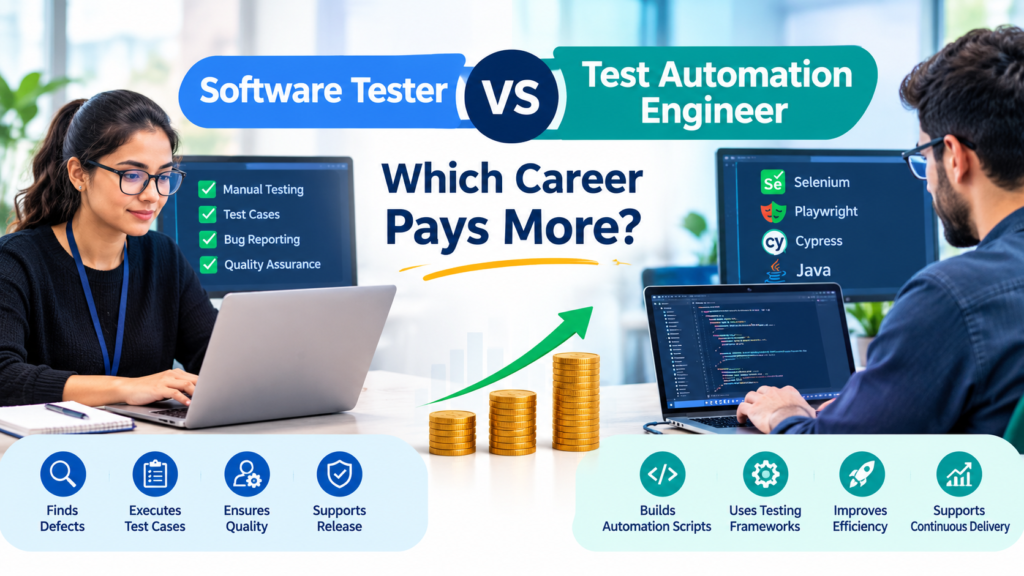
Australian QA Engineer salaries scale steadily with experience and specialisation. Manual testers moving into automation or API testing typically see the fastest pay jumps, since fewer candidates hold both skill sets.
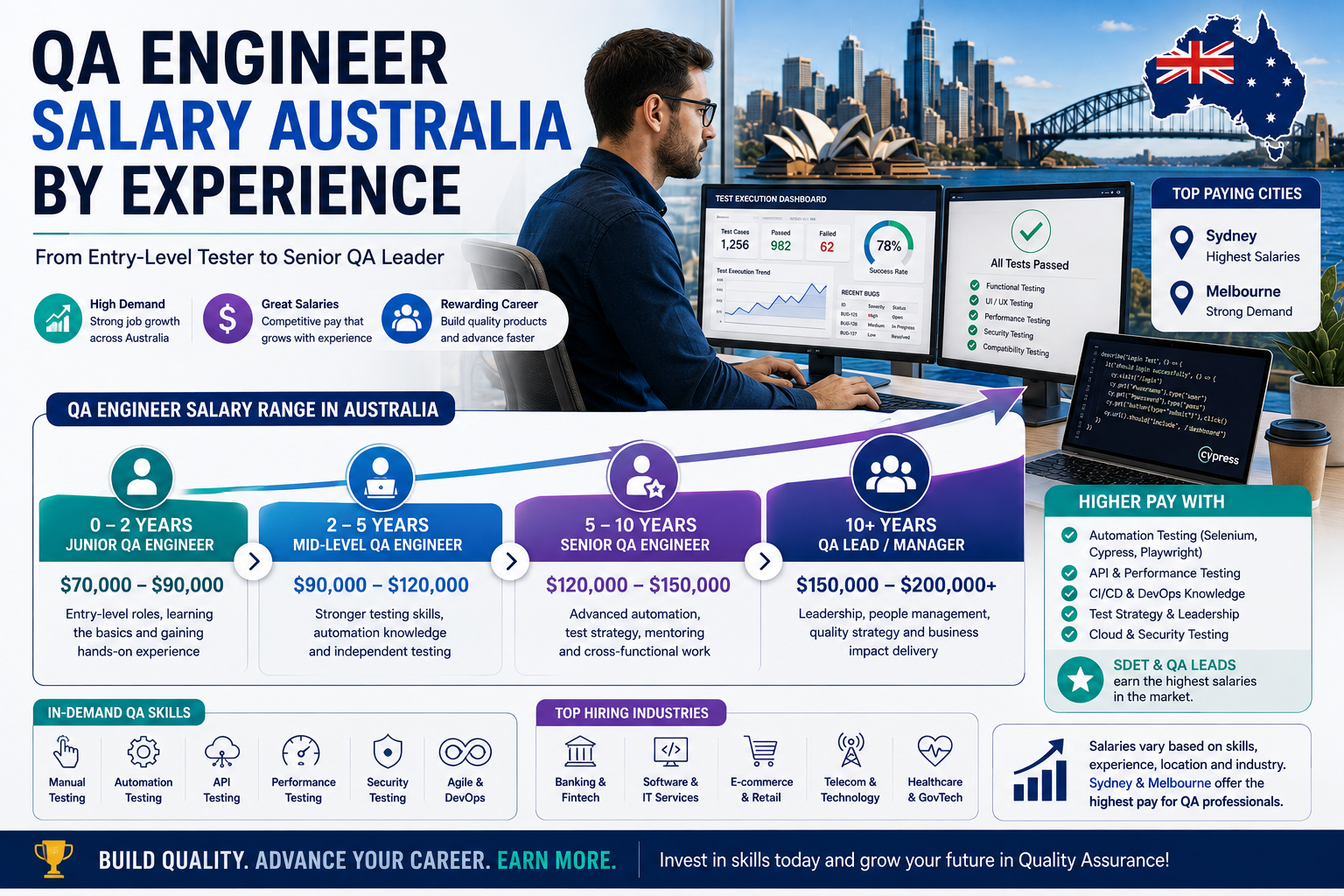
| Experience Level | Typical Salary Range (AUD) | Typical Titles |
| Entry-level (0–2 yrs) | $60K – $80K | Junior QA Tester, Graduate Tester |
| Mid-level (2–5 yrs) | $85K – $115K | QA Engineer, Test Analyst |
| Senior (5+ yrs) | $115K – $140K | Senior QA Engineer, Automation Engineer |
| Lead / Management | $130K – $160K+ | QA Lead, QA Manager, Test Manager |
National averages for the QA Engineer role sit around $97,000–$115,000, with senior automation-focused engineers reaching $120,000–$140,000 and QA leadership roles pushing past $150,000. Figures are indicative and vary by employer size, sector and specific tooling experience.
QA Engineer Salary Australia by City
Location has a real impact on QA Engineer pay in Australia. Sydney and Melbourne consistently lead due to the concentration of finance, tech and enterprise software employers, while Canberra’s government and defence contracts keep salaries competitive despite a smaller market.
| City | Average QA Engineer Salary (AUD) | Notes |
| Sydney | $107,000 – $115,000 | Highest concentration of QA roles; finance & tech sector demand |
| Melbourne | $110,000 – $115,000 | Strong startup and fintech QA hiring |
| Brisbane | $100,000 – $112,500 | Growing government and logistics QA demand |
| Canberra | $105,000 – $110,000 | Government and defence-aligned QA contracts |
| Perth | $95,000 – $110,000 | Mining, resources and enterprise software QA |
| Adelaide | $90,000 – $105,000 | Defence, health and public sector QA roles |
QA Engineer Career Path in Australia
Most QA careers in Australia follow a fairly predictable ladder, though the timeline compresses significantly for people who add automation and API testing skills early.
- Junior / Graduate Tester — manual test case execution, defect logging, learning STLC fundamentals.
- QA Engineer / Test Analyst — designs test cases, owns test coverage for a feature area, works directly with developers and product owners.
- Automation Test Engineer — builds and maintains automated test suites using Selenium or similar frameworks, integrates tests into CI/CD pipelines.
- Senior QA Engineer — leads test strategy for a product, mentors junior testers, owns performance and API testing.
- QA Lead / QA Manager — manages a testing team, owns quality processes and reporting, works closely with engineering leadership.
Skills That Increase QA Engineer Salary in Australia
Employers consistently pay a premium for QA professionals who combine manual testing fundamentals with automation and technical tooling. The highest-value skill combinations in the current Australian market include:
- Manual testing & test case design — still the foundation every QA role builds on.
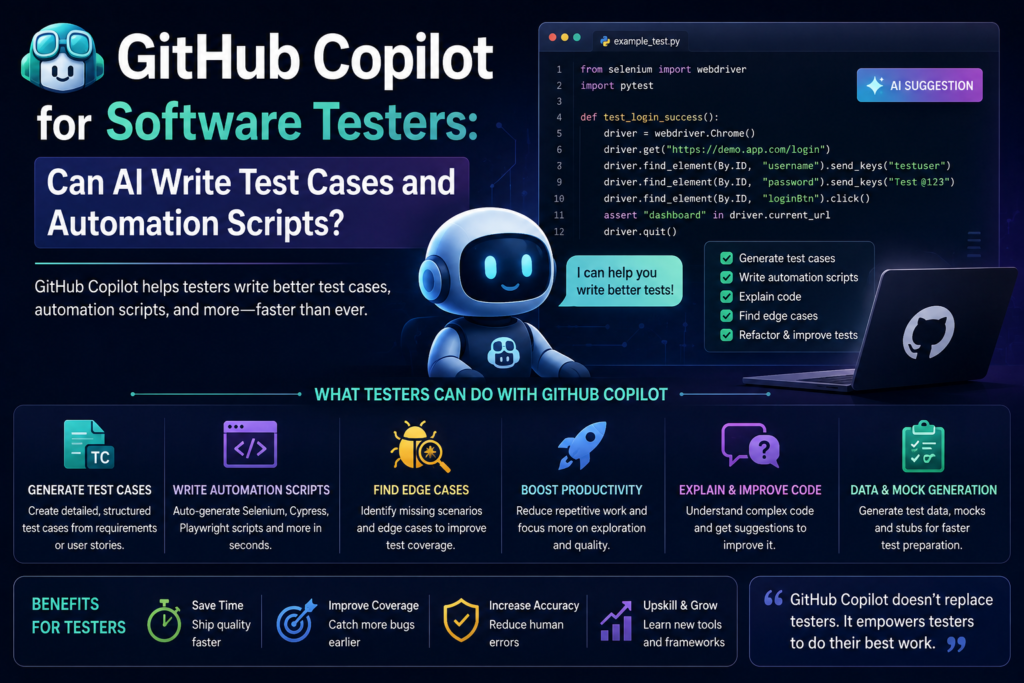
- Selenium & automation scripting — the single biggest salary lever for testers moving beyond manual work.
- API testing with Postman — increasingly required even for “manual” QA roles.
- SQL — needed to validate data in almost every enterprise application.
- JIRA & TestRail — the defect tracking and test management tools most Australian QA teams run on.
- Agile testing practices — QA roles are almost universally embedded inside Agile/Scrum delivery teams.
- CI/CD basics — understanding how automated tests plug into build and deployment pipelines.
ISTQB and Other QA Certifications Worth Getting in 2026
ISTQB certifications are the most widely recognised QA credentials on Australian job ads, and they map directly onto the career path above. Here’s what to study, in order:
ISTQB Foundation (CTFL v4.0)
The baseline certification almost every QA job ad references. Covers testing fundamentals, the software testing life cycle (STLC), and core terminology used across every QA team in Australia.
Train for it: ISTQB Foundation (CTFL) course
Intro to Automation Testing (AUTO-101)
A practical stepping stone into automation before tackling a full Selenium framework ideal for manual testers making the jump.
Train for it: Intro to Automation Testing course
Selenium Testing Foundation Certification
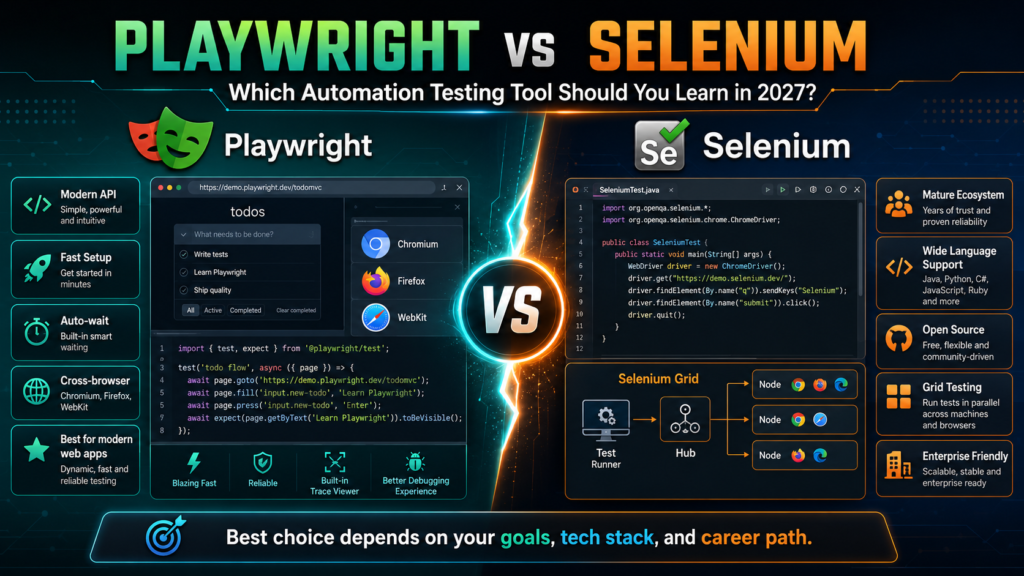
Validates hands-on Selenium scripting skills the automation tool most frequently named in Australian QA and Automation Engineer job ads.
Train for it: Selenium Testing Foundation course
ISTQB Agile Tester Extension
For QA professionals working inside Scrum or Kanban teams which is the default delivery model at most Australian tech employers.
Train for it: ISTQB Agile Tester course
ISTQB CT-MAT (Mobile Application Testing)
A specialisation certification for testers focusing on mobile apps a growing niche as Australian retail, banking and health apps scale.
Train for it: ISTQB CT-MAT course
ISTQB Certified Tester – AI Testing (CT-AI)
One of the newest and fastest-growing specialisations, covering how to test AI-powered and machine-learning-driven features increasingly requested as Australian employers ship AI features.
Train for it: ISTQB AI Testing course
ISTQB Advanced Test Analyst (CTAL-TA)
A senior-level credential for testers moving into Test Analyst or Senior QA Engineer roles, covering advanced test design techniques and risk-based testing.
Train for it: ISTQB Advanced Test Analyst course
Where to Train: QA Courses Across Every Major Australian City
Training is available online Australia-wide, with local pathways for learners in:
See the full course catalogue or speak to a course advisor about the right starting point for your background.
Frequently Asked Questions
What is the average QA Engineer salary in Australia in 2026? Most sources place the national average between $97,000 and $115,000, with senior automation-focused engineers earning $120,000–$140,000.
Do I need a degree to become a QA Engineer in Australia? Not always. Many employers hire on certification (such as ISTQB Foundation) plus a practical portfolio, particularly for entry-level and junior tester roles.
Is manual testing or automation testing more in demand? Both remain in demand, but automation skills consistently attract the highest salary premium, since fewer testers hold strong scripting ability.
How long does it take to become job-ready as a QA Engineer? Most learners move from beginner to an entry-level QA role in 3–6 months with structured training and a project portfolio.
Which certification should I get first? ISTQB Foundation (CTFL) is the standard starting point recognised across almost every Australian QA job ad.
Final Word
QA Engineer salaries in Australia reward specialisation. Start with ISTQB Foundation and manual testing fundamentals, then add Selenium automation and API testing as fast as you can that combination is what moves you from an entry-level tester’s salary into the $110K+ range.
Speak to a course advisor or explore software testing courses available online and across Melbourne, Sydney, Brisbane, Perth, Adelaide and Canberra.