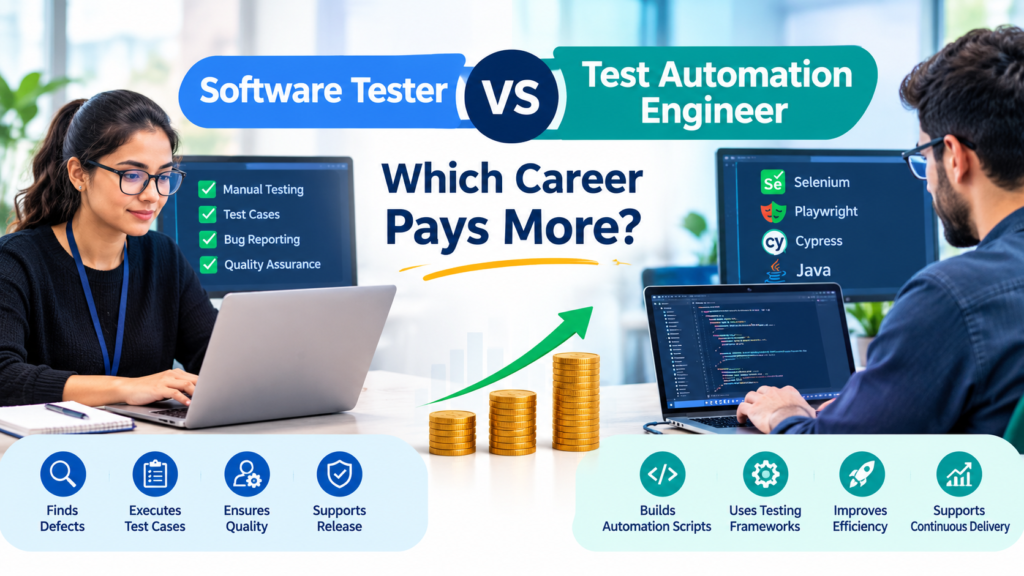
Software testing skills that got someone hired five years ago are quietly failing candidates in interviews today. A resume built entirely around manual test case execution — writing steps, running them by hand, logging bugs in a spreadsheet is one of the fastest ways to get passed over in 2026, even by candidates with years of genuine QA experience. Employers aren’t hiring less; they’re hiring differently, and most rejected candidates never find out why.
The uncomfortable truth is that “I have software testing experience” no longer answers the question employers are actually asking, which is: can you test in a fast-moving, automation-first, AI-assisted delivery pipeline? If the honest answer is no, that’s the gap costing candidates the job not a lack of effort or ability.
Why Employers Are Rejecting Software Testing Candidates
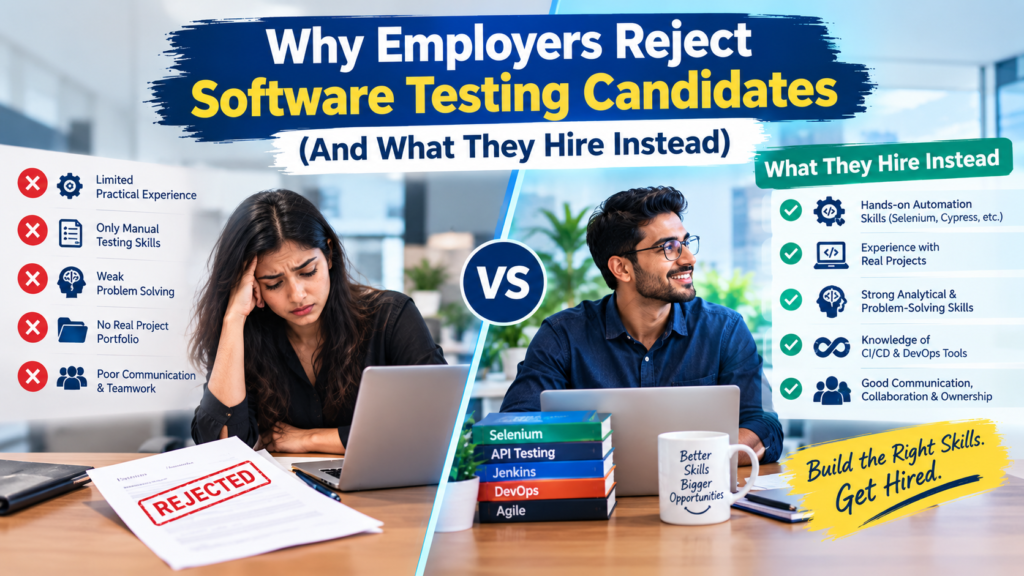
The most common reason isn’t experience level it’s skill mismatch. As we cover in Software Testing Jobs Australia: Complete Guide 2026, Australian employers are increasingly hiring for demonstrated automation and AI-testing capability rather than years spent purely on manual execution. A candidate whose entire software testing skills profile stops at manual regression testing is competing for a shrinking slice of the market, while automation-literate testers are competing for a growing one.
What Employers Hire Instead of Traditional Manual Testers
Automation-First Software Testing Skills
Employers increasingly expect candidates to read, write, or at minimum confidently interpret automated test scripts using tools like Selenium. Even QA Analyst roles that aren’t purely automation positions now list scripting familiarity as a baseline expectation, not a bonus.
AI Testing Literacy Is No Longer Optional
Industry research backs this shift clearly. The 2026 State of Testing Report found that more than three-quarters of testing teams worldwide have already adopted AI into their workflows, with AI-literate testers earning meaningfully higher salaries than those who haven’t adapted. Employers are actively screening for candidates who can validate AI-generated test cases, evaluate AI-assisted outputs, and understand the unique risks of testing AI-driven features which is exactly the gap credentials like ISTQB’s AI Testing certification were built to close.
Communication and Risk Judgement Over Rote Test Execution
A tester who can only follow a predefined script is easy to automate out of a role. A tester who can assess risk, prioritise what actually needs coverage, and clearly explain a defect’s business impact to a non-technical stakeholder is far harder to replace and far more likely to get hired.
The Software Testing Skills Employers Are Actually Screening For
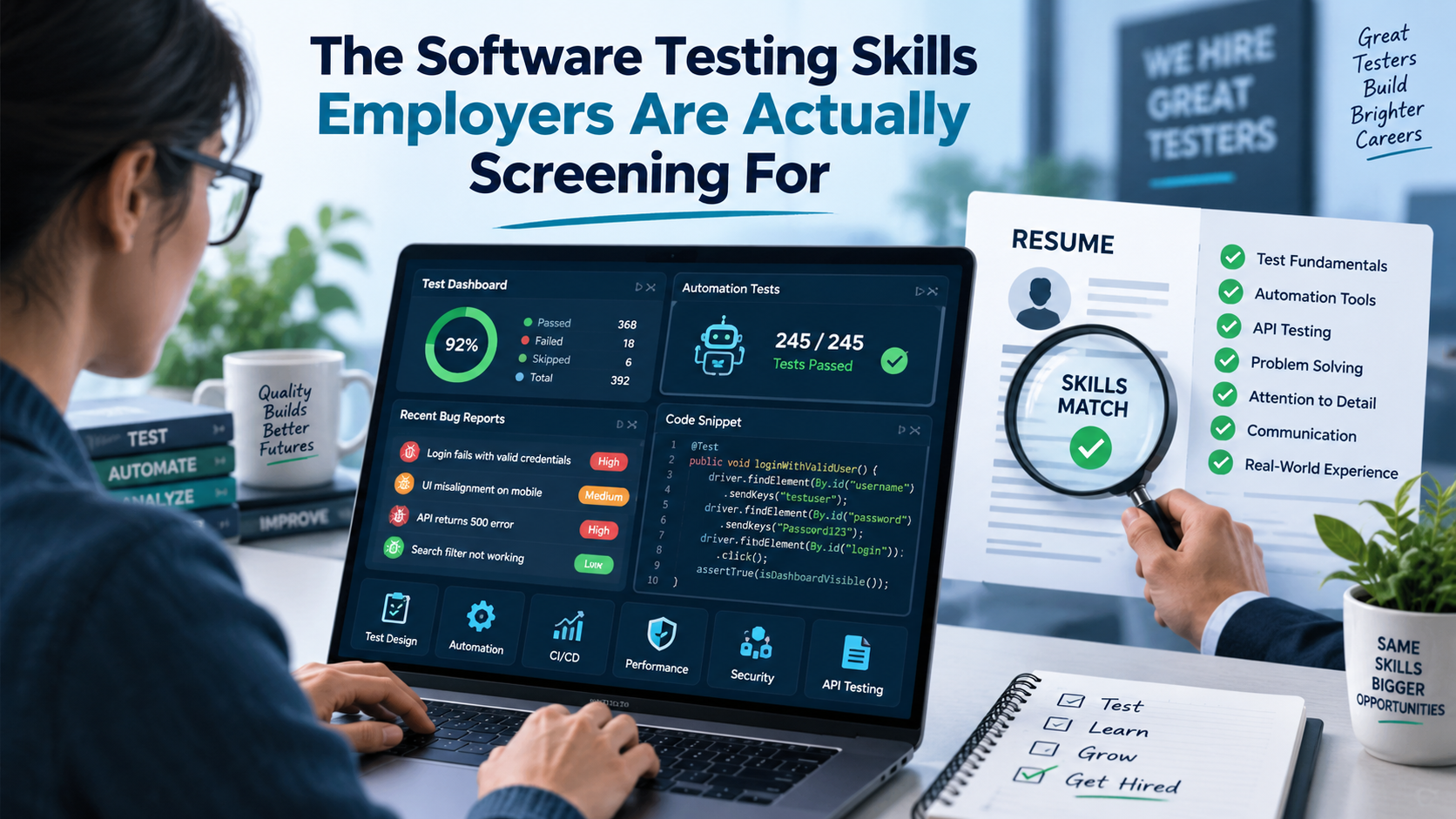
- Working knowledge of an automation framework such as Selenium, not just manual test case writing
- Basic scripting or coding literacy, even at a foundational level
- Practical exposure to AI-assisted testing and validating AI-generated outputs
- API and integration testing fundamentals, not just UI-level checks
- Clear defect reporting and stakeholder communication under Agile delivery timelines
How to Build In-Demand Software Testing Skills
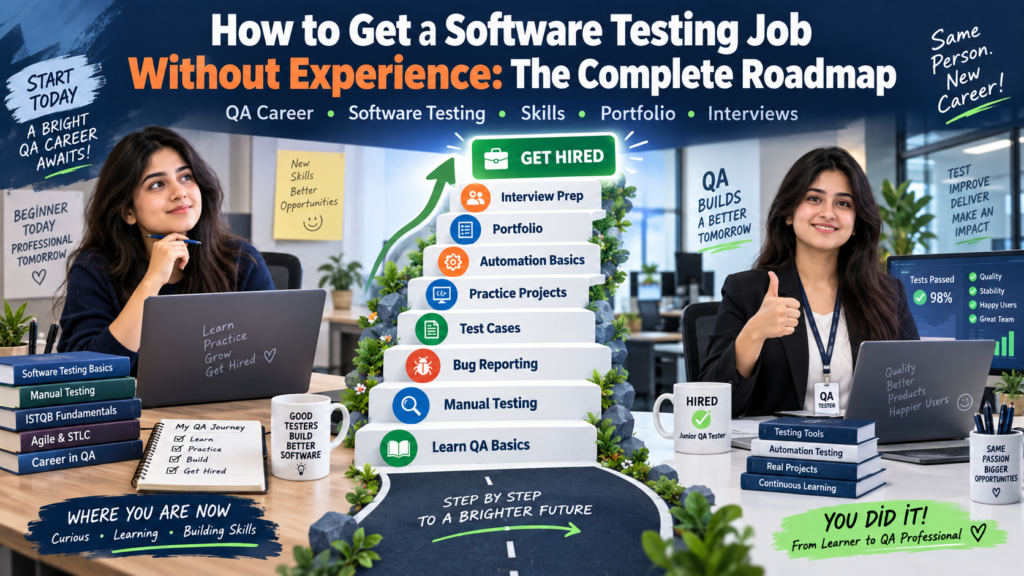
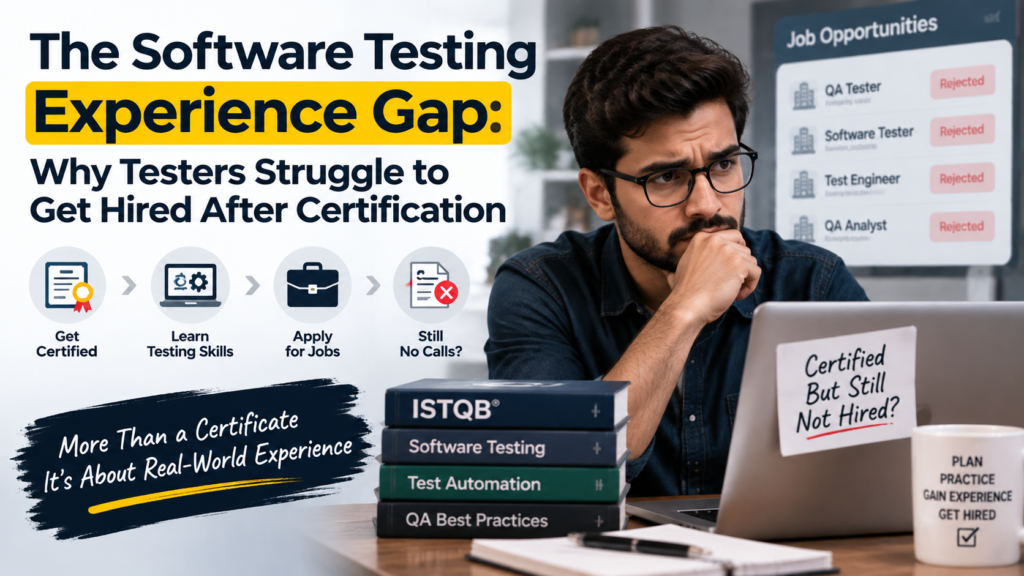
The good news is that this gap is entirely closeable with structured training. A strong starting point is our ISTQB Foundation (CTFL v4.0) Course, which builds the structured testing fundamentals every employer expects as a baseline. From there, candidates looking to move beyond manual testing typically progress to our Intro to Automation Testing (AUTO-101) and Selenium Testing Foundation Certification courses to build the automation software testing skills employers now expect as standard.
For candidates aiming specifically at the AI-testing gap, our ISTQB Certified Tester – AI Testing (CT-AI) course is purpose-built to teach exactly the skills covered above validating AI-driven functionality and understanding model-specific testing risk. If you’re still comparing credential options, our guides What Are ISTQB Courses? A Complete Career Guide and Software Testing Certification: The Complete Guide for 2026 break down which pathway fits your current experience level.
Software Testing Courses Across Australia
We deliver practical, job-focused software testing training online and in person across:
- Software testing courses in Melbourne
- Software testing courses in Sydney
- Software testing courses in Brisbane
- Software testing courses in Perth
- Software testing courses in Adelaide
- Software testing courses in Canberra
Frequently Asked Questions
Is manual testing experience still valuable to employers?
Yes, but rarely on its own. Manual testing fundamentals remain the foundation of good software testing skills understanding requirements, designing coverage, and thinking critically about risk but employers now expect that foundation paired with automation and AI-testing literacy.
Do I need to learn to code to stay competitive in software testing?
Not necessarily to an advanced level, but basic scripting literacy has become a common screening filter, especially for automation-adjacent QA Analyst and Automation Tester roles.
Which software testing skills should I prioritise first?
Start with structured manual testing fundamentals through ISTQB Foundation, then layer in automation and AI-testing capability. Our team can help you map the right pathway get in touch with a course advisor to discuss your current background and target roles.
Final Thoughts
Employers aren’t rejecting software testing candidates because testing has become less important they’re rejecting resumes that stopped evolving while the role kept changing. Automation, AI-testing literacy, and risk-based judgement are what’s getting candidates hired now. Explore our full range of software testing courses or contact our team to build the software testing skills employers are actually hiring for.