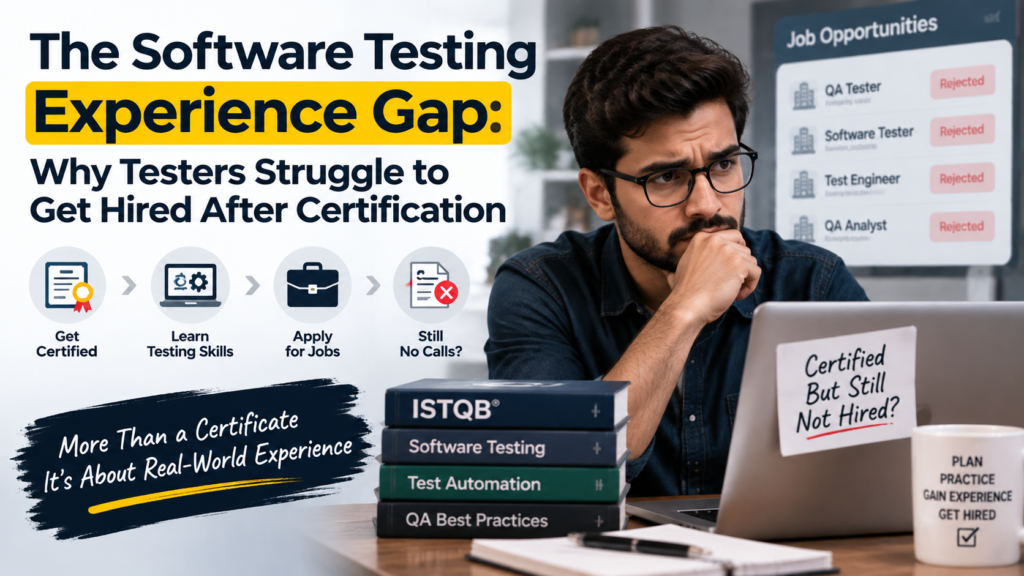

Passing a certification exam feels like the hard part is over. Then the job applications start, and nothing happens. Why testers struggle to get hired after certification comes down to one consistent gap: certification proves you understand testing theory, but employers are hiring for proof you can actually test something real. This article explains exactly where that gap comes from, and how to close it with the right software testing courses and practical experience.
Why Testers Struggle to Get Hired After Certification
A certification like ISTQB Foundation proves you know the vocabulary and principles of testing test levels, test techniques, defect lifecycle. It doesn’t prove you can sit in front of a real application, write meaningful test cases under ambiguity, or work inside an actual Agile team. Employers know this, which is exactly why so many newly certified testers get filtered out before an interview, no matter how well they scored on the exam.
The Real Reasons the Experience Gap Exists
1. No Practical Proof of Skill
A certificate on a resume tells an employer you passed a multiple-choice exam. It doesn’t show them how you actually think through testing a real feature. Without a portfolio, sample test cases, or a documented project, there’s nothing tangible for an employer to evaluate beyond the certificate itself.
2. No Exposure to Automation Tools
Most junior QA roles now expect at least basic exposure to automation, even in manual-testing-focused positions. Certification alone rarely includes hands-on tool practice, which is exactly the gap courses like Intro to Automation Testing (AUTO-101) and Selenium Testing Foundation are built to close.
3. No Real-World Agile Context
Testing theory rarely covers what it’s actually like to test inside a fast-moving Agile sprint, with shifting requirements and constant collaboration with developers. The ISTQB Agile Tester Extension is specifically designed to bridge this, giving candidates language and experience employers recognise as job-ready.
4. A Generic, Certificate-Only Resume
Listing a certification and nothing else tells an employer very little about how you’d actually perform. Resumes that lead with specific examples a personal testing project, a bug you found and documented well, a process you improved stand out immediately against a sea of certificate-only applications.
5. No Professional Network in QA
Many junior QA roles are filled through referrals and community connections before they’re ever publicly advertised. Newly certified testers who stay isolated from the QA community miss opportunities that never show up in a job board search.
6. Weak Interview Preparation
Technical testing interviews often include scenario-based questions “how would you test this login form” that certification study alone doesn’t prepare you for. Without practising this specific interview format, even strong candidates can freeze or give textbook answers that don’t demonstrate real thinking.
How to Close the Software Testing Experience Gap
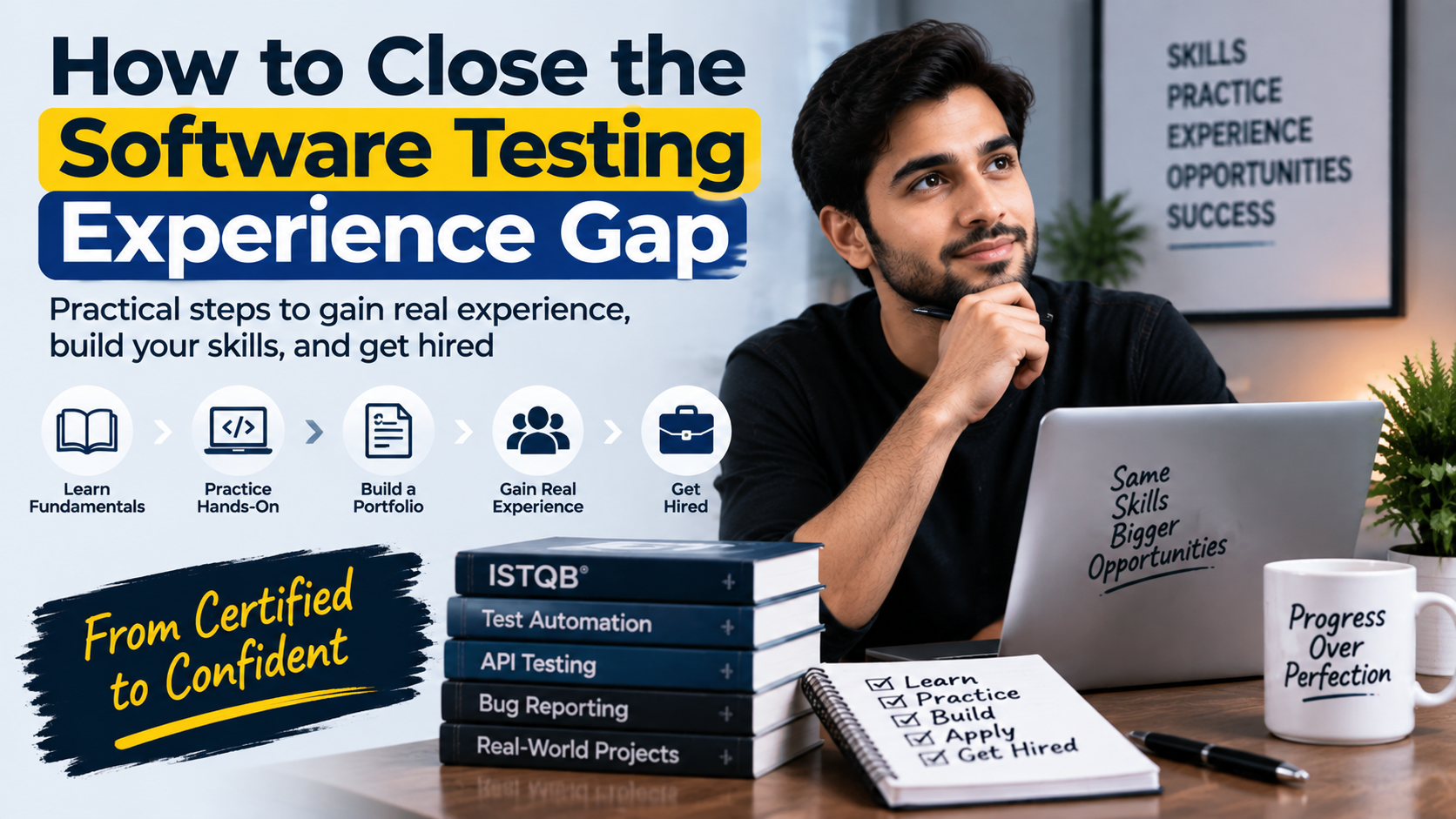
- Build a small portfolio: test plans, test cases and bug reports from a personal or open-source project
- Get hands-on with at least one automation tool, even at a basic level
- Practise scenario-based interview questions out loud, not just in your head
- Join QA communities and attend meetups or webinars to build real connections
- Rewrite your resume around specific examples, not just the certification itself
Certifications That Build Job-Ready Skills, Not Just Theory
Starting with ISTQB Foundation (CTFL) is still the right first step it builds the shared vocabulary every QA team expects. From there, testers serious about closing the experience gap typically add practical, tool-based training and an Agile-context certification, rather than stacking multiple theory-only credentials. Testers aiming at specialised or senior-track roles later also benefit from certifications like ISTQB Advanced Test Analyst, which employers increasingly use to distinguish genuinely skilled candidates from certificate collectors.
Why This Gap Is Getting More Attention in the Industry
According to ISTQB, certification is intended to establish a shared, internationally recognised baseline of testing knowledge not to replace hands-on experience, which is exactly why employers continue to screen for practical skill alongside it. Communities like Ministry of Testing consistently highlight that testers who actively build and share practical work blog posts, testing projects, community contributions get noticed by employers far more often than those relying on certification alone.
QA Hiring Demand Across Australia
Employers across Melbourne, Sydney, Brisbane, Perth, Adelaide and Canberra continue to hire junior QA Analysts but consistently favour candidates who can show practical testing and automation exposure alongside their certification, not the certification on its own.
Common Mistakes That Widen the Experience Gap
- Stopping at one certification and assuming it’s enough to get hired
- Applying to dozens of jobs with the same generic, certificate-only resume
- Avoiding automation because it feels intimidating as a beginner
- Never practising scenario-based interview questions out loud
- Staying disconnected from the wider QA community and job network
Final Thoughts
If you’ve been asking why testers struggle to get hired after certification, the honest answer is that certification was only ever meant to be the starting point. Build a small portfolio, get hands-on with automation, and practise interviewing then back it with structured software testing courses that go beyond theory. Speak to a course advisor to plan the right next step for your QA career.