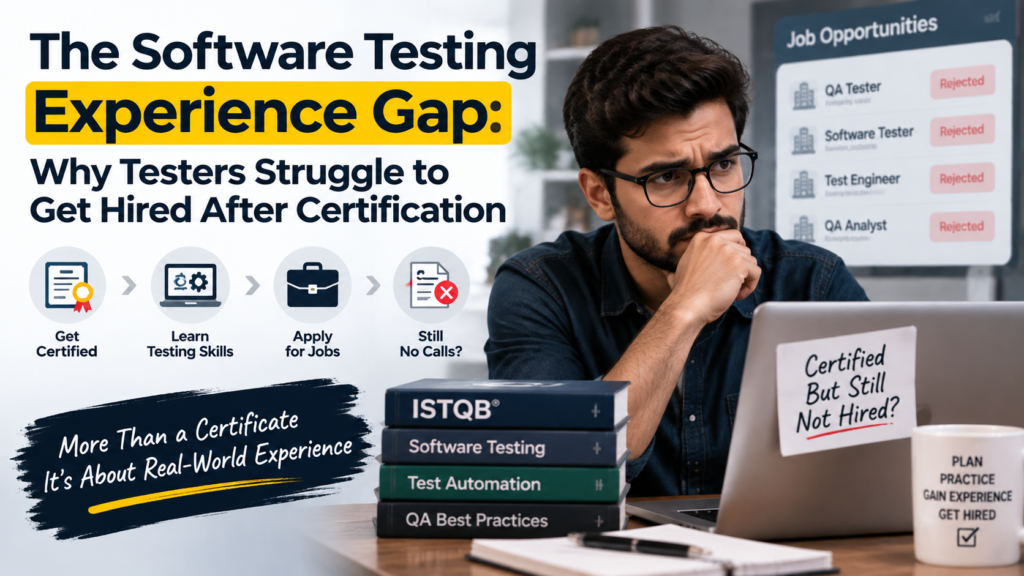
Software testing certification jobs should be a straightforward equation. Pass ISTQB Foundation, add it to your CV, get hired as a QA analyst. Then the applications go out, the interviews don’t come, and the certificate that was supposed to open doors sits there looking exactly as valid as it did the day you earned it.
Nothing is wrong with the certificate. Plenty of people hold it. Far fewer turn it into an actual testing role. The gap isn’t the exam. It’s what employers are quietly screening for once the CV clears the first filter.
This guide looks at software testing certification jobs from the hiring side: why ISTQB and similar credentials don’t guarantee interviews, what Australian employers actually want, and what closes the gap. It’s written for career changers, junior testers and graduates in Sydney, Melbourne, Brisbane, Perth, Adelaide and Canberra.
The Short Answer
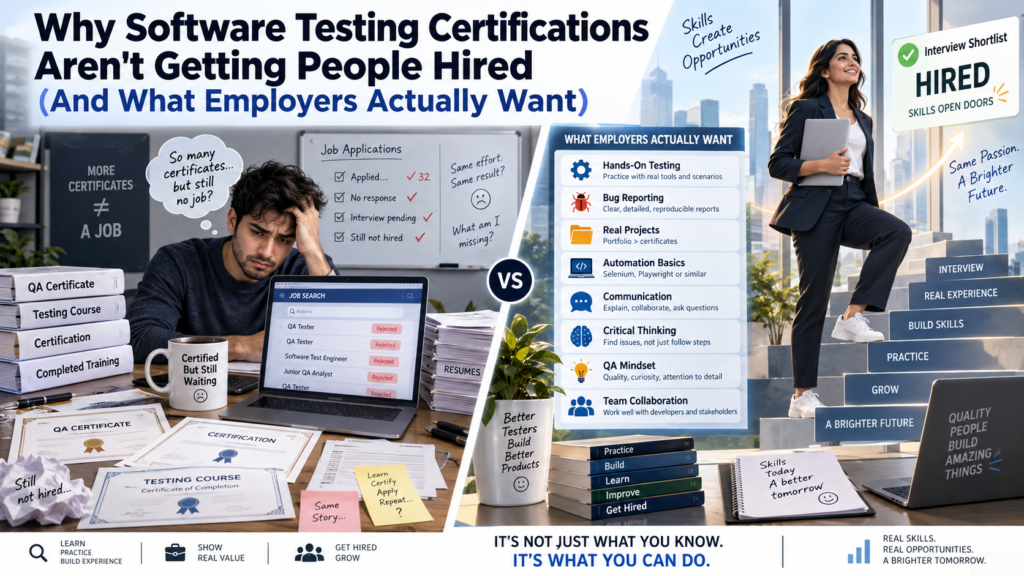
Software testing certification jobs are hard to land on the certificate alone because ISTQB proves you understand testing concepts and terminology, not that you can test a real, messy application under time pressure. Employers hire for hands-on testing experience, a documented portfolio, basic automation exposure and clear bug-reporting skills. Candidates who pair certification with a small testing project and target the right entry titles get hired far faster than those who wait for the badge to do the work.
What ISTQB Actually Proves to an Employer
The ISTQB Foundation Level covers testing fundamentals: the test process, test techniques, static testing and test management basics. It’s globally recognised and a genuinely useful baseline. It’s also, by ISTQB’s own description, an entry point into the profession rather than proof of practical skill.
Hiring managers read it that way. It says you understand vocabulary like equivalence partitioning and boundary value analysis, and that you were serious enough to sit a structured exam. It doesn’t say you’ve ever raised a bug against a real sprint, argued a severity rating with a developer, or worked out why a test suite is randomly failing.
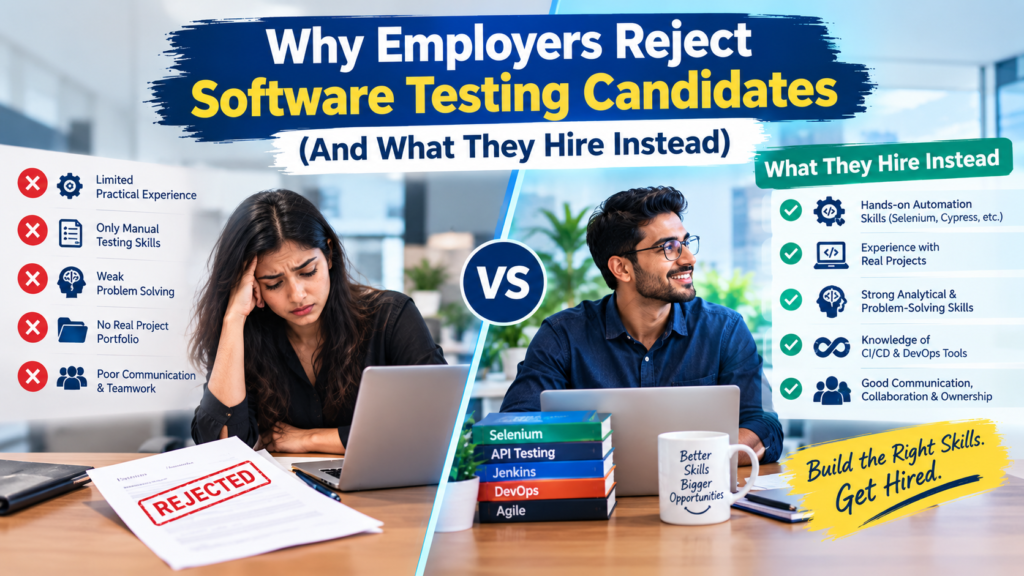
Why Certified Candidates Still Get Passed Over
Understanding these patterns is the fastest way to turn software testing certification jobs from a wish into a plan.
These six patterns show up again and again in why software testing certification jobs don’t materialise as quickly as candidates expect.
1. Everyone holds the same certificate
ISTQB Foundation is one of the most widely taken entry credentials in testing. On its own it can’t separate you from the other forty applicants who also hold it. What separates you is evidence beyond the badge.
2. No proof of hands-on testing
Two candidates, same certificate. One has a short portfolio: a test plan, a set of test cases against a real or sample application, and two or three bug reports with steps to reproduce. The other has a CV line that says “ISTQB certified”. The first gets the phone screen.
3. Weak bug reports
“The button doesn’t work” tells a developer nothing. “Clicking Submit on Chrome 128 with an empty email field returns a 500 error instead of a validation message; steps attached” tells them everything. Employers read your writing as a preview of how you’ll actually report defects on the job.
4. No exposure to automation at all
Manual testing is still real, valuable work, but most modern QA teams expect at least basic familiarity with an automation tool such as Selenium, Playwright or Cypress. Zero exposure signals you haven’t looked past the exam syllabus.
5. Applying for the wrong titles
Searching for “QA Engineer” and finding nothing suitable leads to the wrong conclusion. Genuine entry roles usually sit under titles like Junior Tester, Graduate Test Analyst or QA Support, not “Engineer”.
6. Treating the exam as the finish line
Certifications don’t expire quickly, but confidence and practical fluency fade fast if you stop practising after the exam. Candidates who pass, wait a few months, then apply, often find their test-design instincts have gone soft.
What Employers Actually Want for Software Testing Certification Jobs
Across Australian junior QA and test analyst ads, the same requirements keep repeating. The table sets them against what ISTQB alone shows, and how to close the gap.
| What employers want | What ISTQB alone shows | How to close the gap |
| Hands-on manual testing | Test process and technique theory | Build and document a small test plan against a real app |
| Clear bug reporting | Nothing directly | Write reports with steps, expected vs actual result, severity |
| Basic automation exposure | Not covered at Foundation level | Learn one tool, such as Selenium or Playwright, at a basic level |
| SQL and basic technical literacy | Not covered | Learn simple SELECT queries for test data checks |
| Tools like Jira and TestRail | Not covered | Practise logging tickets in a free or trial instance |
| Agile and sprint awareness | Lightly touched on | Understand how testing fits into a sprint cycle |
| Communication with developers | Not covered | Practise explaining a bug to a non-tester clearly |
| Judgement on risk and priority | Introductory concepts only | Practise triaging which bugs matter most and why |
A Tale of Two Certified Testers
Picture two candidates applying for the same junior QA role, both ISTQB Foundation certified, both graduates of the same course. Amara’s CV says “ISTQB Foundation certified, seeking QA role”. Dev’s CV says the same thing, plus a link to three documented test cycles against a sample e-commerce site, five sample bug reports, and a note that he’s completed a beginner Playwright tutorial.
The recruiter can’t test either of them yet, so they trust the evidence in front of them. Dev goes to the technical screen. Nobody decided Amara was less capable. Dev simply lowered the hiring risk, and that’s the whole story behind why software testing certification jobs go to some candidates and not others with the identical exam result.
Realistic First Roles (And Where They Lead)
These are the roles that actually turn software testing certification jobs into an offer, rather than another round of silence.
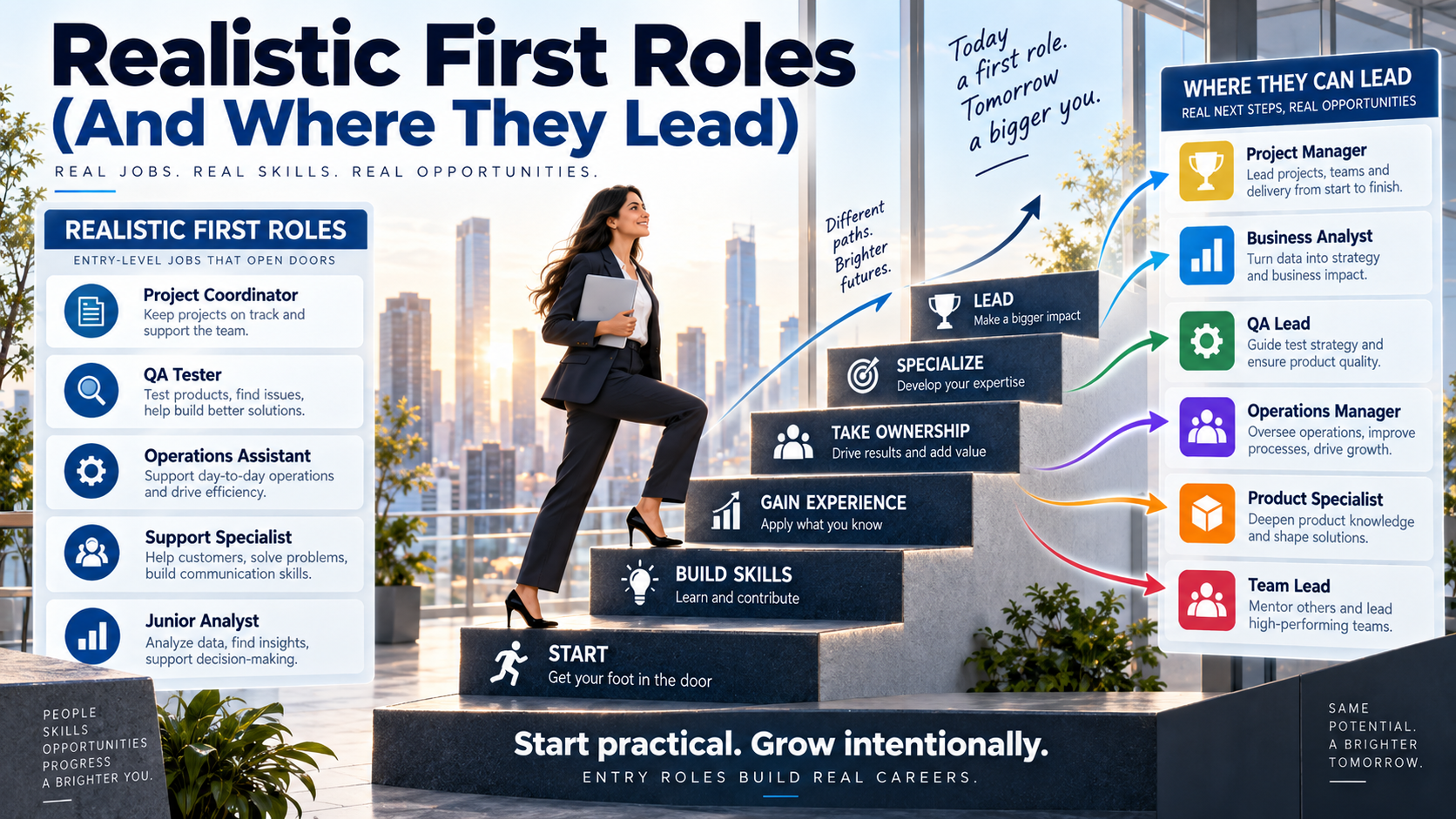
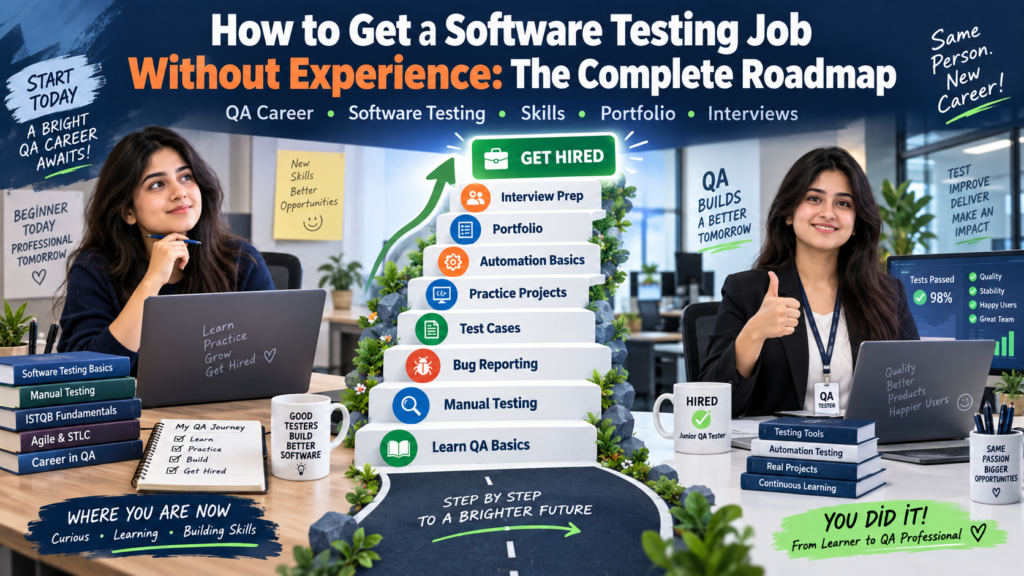
Almost nobody moves straight from ISTQB to Senior QA Engineer. Most people take one of these entry points first. Our roadmap for getting a testing job without experience covers the earliest stage in more depth.
| First role | Day-to-day work | Why it works |
| Junior Tester / Test Analyst | Execute test cases, log bugs, follow test plans | Closest match to ISTQB fundamentals |
| Graduate QA Analyst | Structured graduate program with mentoring | Built-in support while you build real experience |
| QA Support / Test Coordinator | Coordinate test cycles, manage test data and environments | Broad exposure without needing automation yet |
| Manual to Automation Trainee | Manual testing with gradual automation exposure | Sets up the higher-paying automation path |
Our Manual vs Automation Testing guide and Software Tester vs Test Automation Engineer comparison help you plan which direction to specialise in once you’re in.
The Software Testing Certification Jobs Checklist
Tick a statement only if you could back it up with a demo or example in an interview.
- I can explain equivalence partitioning and boundary value analysis with a real example.
- I’ve written at least three test cases against a real or sample application.
- I’ve written a bug report with clear steps to reproduce, expected and actual results.
- I’ve tried at least one automation tool, even at a beginner level.
- I can write a basic SQL SELECT query to check test data.
- I’ve used a tool like Jira, TestRail or a free equivalent to log a ticket.
- My CV names tools and outcomes, not just “ISTQB certified”.
- I’m applying for Junior Tester and Graduate QA titles, not just “QA Engineer”.
Six or more ticks? Start applying with confidence. Fewer than four? The certificate isn’t the problem. Practice is, and it’s fixable in a few weeks.
How to Write a CV for Software Testing Certification Jobs
- Lead with a two-line summary naming your target title, ISTQB Foundation and one concrete testing result.
- Describe test work as mini case studies: “Wrote 15 test cases for a sample login flow, found 4 defects, documented each with repro steps.”
- Mirror the ad’s keywords: test cases, defect logging, regression testing, Agile, Jira.
- Name your tools: Playwright, Selenium, Postman, Jira, TestRail, if you’ve touched any of them.
- Link to a short portfolio page showing your test plan and sample bug reports.
What Interviewers Are Really Testing
- “Walk me through how you’d test a login form.” This tests structure and technique, not memorised theory.
- “Show me a bug report you’ve written.” This tests communication and attention to detail.
- “What would you do if a developer disagreed with your bug’s severity?” This tests judgement and collaboration, not just technical correctness.
- “Tell me about a test you missed.” This tests honesty and learning, not perfection.
Software Testing Certification Jobs by City
Where you live shapes which entry points exist. This is a general picture, not a promise of vacancies, so check current listings on SEEK.
| City | Where entry-level roles commonly appear | What helps most |
| Sydney | Banks, consultancies, software vendors | Documented test portfolio to stand out in a crowded market |
| Melbourne | Software companies, health, education, retail | Automation exposure alongside manual fundamentals |
| Brisbane | State government, education, resources services | Agile and sprint-based testing experience |
| Perth | Mining and resources software teams, MSPs | Comfort with remote or distributed testing teams |
| Adelaide | Defence, government, health, smaller software teams | Local networking, since the pool of QA roles is smaller |
| Canberra | Federal government and defence contractors | Checking citizenship and clearance requirements early |
Is ISTQB Still Worth It for Software Testing Certification Jobs?
Yes, as a starting point rather than the whole plan. It’s recognised by employers, it structures your thinking about testing, and it’s the standard first step before specialising into automation. Read more on AI in software testing to see where the field is heading once you’re in.
If you’re deciding whether to go ahead, the ISTQB Foundation course is instructor-led and hands-on, runs in Melbourne, Sydney, Brisbane, Adelaide, Canberra and Perth, live online, or in-house, and includes the exam.
Software Testing Certification Jobs: Frequently Asked Questions
Is ISTQB enough to get a testing job in Australia?
On its own, rarely. That’s really the whole story behind why software testing certification jobs are harder to land than expected: it gets your CV past filters and proves you understand testing fundamentals, but employers still look for hands-on practice, clear bug reports and some automation exposure. Treat it as the entry ticket, not the whole journey.
What’s the best first job after ISTQB Foundation?
Junior Tester, Test Analyst and Graduate QA Analyst roles are the most accessible. They give you real defect logging experience and colleagues who can mentor you into automation later.
Do I need to learn automation before applying?
Not fully, but basic exposure to one tool helps significantly. Manual testing roles still exist and are a valid entry point, but showing you’ve started on automation signals more long-term potential.
How many test cases or bug reports should I have before I apply?
There’s no fixed number, but three to five well-documented test cases and a handful of clear bug reports against a real or sample application is a sensible start.
Is a software testing certification worth it without a technical background?
Yes. Testing is one of the more accessible entry points into tech because it rewards attention to detail and clear communication as much as coding. A non-technical background is not a barrier if you build the practical evidence this guide describes.
Your Next Step
Software testing certification jobs are real, and people land them every month. They just don’t land them by waiting on the certificate alone. Write three test cases and two bug reports this week, document them, and apply for one Junior Tester or Graduate QA role before the month is out.
Prefer to train with instructors first? Explore our ISTQB Foundation course, or speak to the team at Logitrain about the best option for your city.